 Add to Pinterest
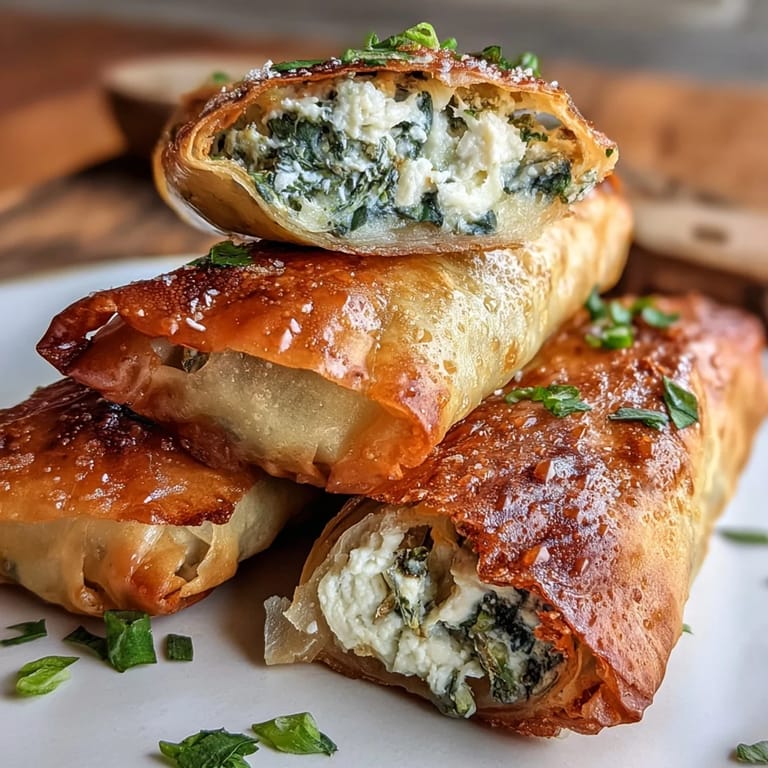
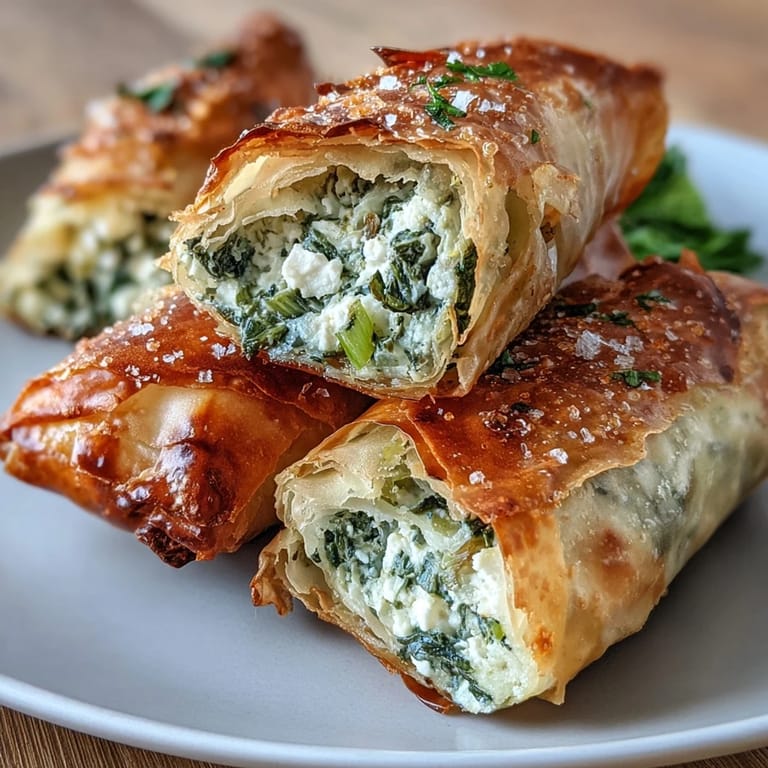
 My neighbor Marina handed me a tray of these at a block party last spring, still warm and crackling. She said she'd been making them for her kids instead of traditional spanakopita because they vanished faster and left no phyllo shards all over the kitchen. One bite in, I understood why her teenagers fought over the last piece. The creamy feta-spinach center wrapped in that shatteringly crisp shell was everything I loved about Greek flavors, just easier to eat and twice as fun to make.
I made my first batch for a potluck where half the group claimed they didn't like spinach. By the end of the night, the platter was empty and three people had texted me for the recipe. There's something about the way the nutmeg hums quietly behind the feta that changes minds. I watched one skeptic take a cautious bite, pause, then reach for two more without a word.
Ingredients
- Fresh spinach: Wilting it fresh gives you more control over moisture, but frozen works if you really squeeze it dry, otherwise your rolls turn soggy.
- Feta cheese: The salty, tangy backbone of the filling, crumbled so it distributes evenly and doesn't clump in one bite.
- Ricotta cheese: This creamy binder smooths out the feta's sharpness and keeps the filling from feeling too crumbly or dry.
- Spring onions: Milder than regular onions, they add a gentle bite without overpowering the herbs or turning harsh when cooked.
- Fresh dill: The signature Mediterranean flavor here, bright and a little grassy, it makes the filling taste unmistakably Greek.
- Fresh parsley: Adds a clean, earthy freshness that balances the richness of the cheeses and the anise note of dill.
- Egg: Beaten in to hold everything together so the filling doesn't crumble out when you bite into the roll.
- Ground nutmeg: Just a whisper warms up the greens and dairy without announcing itself, it's the secret hum in the background.
- Black pepper and salt: Season the filling so every element tastes intentional, not bland or one-note.
- Spring roll wrappers: Thin, sturdy, and they crisp up like a dream in hot oil, way easier to work with than phyllo.
- All-purpose flour and water: Mixed into a simple paste that seals the edge of each roll so nothing bursts open while frying.
- Vegetable oil: For frying, you need enough depth to float the rolls and get them evenly golden without scorching.
Tired of Takeout? 🥡
Get 10 meals you can make faster than delivery arrives. Seriously.
One email. No spam. Unsubscribe anytime.
Instructions
- Wilt the spinach:
- Heat your skillet over medium and toss in the fresh spinach, stirring until it collapses into a dark green tangle, about 2 to 3 minutes. If you're using frozen, make sure it's thawed and wrung out in a clean towel until your hands ache, then skip the wilting and just chop it coarsely.
- Mix the filling:
- In a large bowl, combine the cooled chopped spinach, crumbled feta, ricotta, spring onions, dill, parsley, beaten egg, nutmeg, pepper, and salt, stirring until everything is evenly distributed and creamy. Taste it now, this is your moment to adjust salt or add more dill if you want that herby punch louder.
- Make the sealing paste:
- Whisk together the flour and water in a small bowl until smooth and free of lumps. This gluey mixture is what keeps your rolls from unrolling mid-fry, so make sure it's thick enough to cling to your finger.
- Wrap the rolls:
- Lay one spring roll wrapper on your counter with a corner pointing toward you, spoon about 2 tablespoons of filling near that bottom corner, then fold it over the filling, tuck in the sides like you're wrapping a tiny burrito, and roll up tightly. Brush the final corner with your flour paste and press to seal, then set aside and repeat until all the filling is gone.
- Heat the oil:
- Pour vegetable oil into a deep skillet or pot until it's about 4 to 5 centimeters deep, then heat it to 175 degrees Celsius. Test it by dropping in a tiny bit of wrapper, it should sizzle and float immediately without burning.
- Fry until golden:
- Working in batches so you don't crowd the pan, slide the rolls into the hot oil and fry for 2 to 3 minutes per side, turning once, until they're deep gold and crackling. Lift them out with a slotted spoon and drain on paper towels while you fry the rest.
- Serve hot:
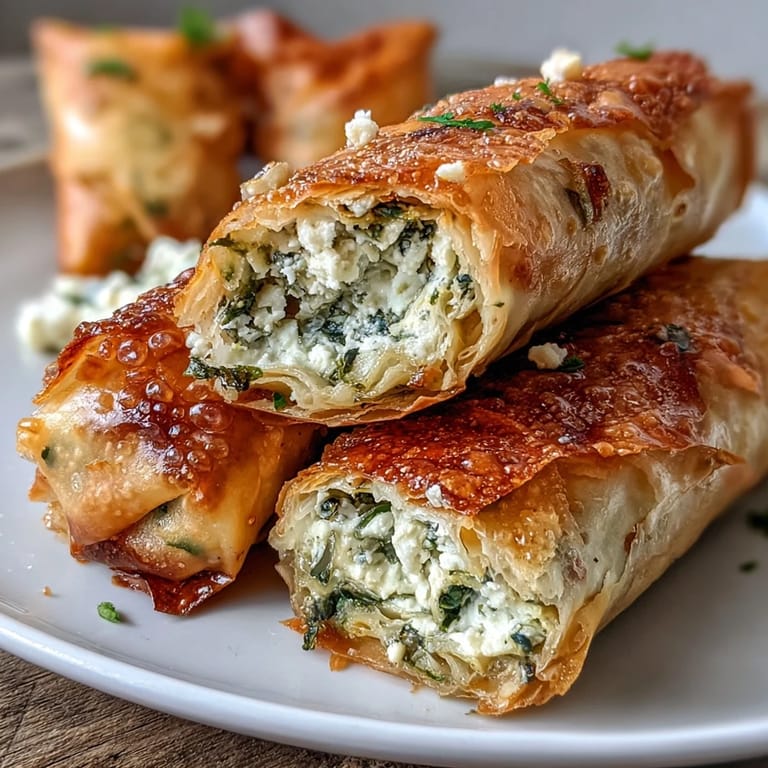
- Pile them on a platter while they're still warm and crispy, with a bowl of yogurt-dill dip or lemon wedges on the side. They're best eaten immediately, but they'll hold their crunch for a good hour if you keep them uncovered.
 Add to Pinterest
 The first time I served these at a family dinner, my aunt declared them better than her own spanakopita and asked if I'd make a double batch for her birthday. I did, and watching her friends crack into them with their hands instead of forks felt like the highest compliment. These rolls turned a traditional recipe into something people actually reach for first, not out of politeness but because they can't help it.
Making Them Ahead
I've learned that wrapping all the rolls in the morning and keeping them covered in the fridge until dinner works beautifully, they stay tight and fry up just as crisp. You can also freeze them uncooked on a baking sheet, then transfer to a freezer bag once solid, and fry them straight from frozen by adding an extra minute or two to the cooking time. This trick has saved me more than once when unexpected guests showed up and I needed something impressive fast.
Baking Instead of Frying
If you want to skip the oil, arrange the rolls on a parchment-lined baking sheet, brush them lightly with olive oil or melted butter, and bake at 200 degrees Celsius for 16 to 18 minutes, flipping them halfway through. They won't have quite the same shatter as the fried version, but they'll still be golden and crisp enough to satisfy, and your kitchen won't smell like a fryer for the rest of the night.
Serving and Pairing Ideas
I've served these with everything from classic tzatziki to a quick lemon-yogurt dip made by stirring zest and juice into Greek yogurt with a pinch of salt. They also pair surprisingly well with marinara if you have Italian-leaning guests, or a spicy harissa mayo if you want to veer North African.
- A simple arugula salad with lemon vinaigrette cuts through the richness and keeps the plate feeling light.
- Serve them alongside other mezze like hummus, olives, and stuffed grape leaves for a full Mediterranean spread.
- Leftover rolls reheat beautifully in a hot oven for 5 minutes, don't microwave them or they'll go rubbery.
 Add to Pinterest
 These rolls have become my go-to whenever I want to impress without the fuss of phyllo dough and melted butter. They're proof that sometimes the best recipes come from borrowing an idea and making it easier, crispier, and impossible to stop eating.
Recipe Questions & Answers
- → Can I bake these instead of frying?
Yes, you can bake them at 200°C (400°F) for 16-18 minutes, turning halfway through, until golden and crisp for a lighter version.
- → Can I use frozen spinach?
Absolutely. Use 200g of frozen spinach, ensuring it is completely thawed and squeezed very dry to prevent soggy filling.
- → How do I prevent the wrappers from tearing?
Keep the wrappers covered with a damp towel while working, don't overfill, and roll tightly but gently to avoid tearing.
- → What dipping sauces work best?
Tzatziki, yogurt-dill sauce, marinara, or spicy harissa all complement the Mediterranean flavors beautifully.
- → Can I make these ahead of time?
Yes, assemble the rolls and refrigerate for up to 24 hours before frying, or freeze for up to 3 months and fry from frozen, adding 1-2 minutes cooking time.
- → What herbs can I substitute?
Fresh mint or oregano work wonderfully in place of dill or parsley for a different flavor profile while maintaining the Mediterranean character.