 Add to Pinterest
 There's this moment when you're standing in front of your stove, pan sizzling, and the smell of garlic and ginger hits you right as the salmon starts to turn golden—that's when you know this meal is going to be something special. I discovered teriyaki salmon bowls years ago on a Tuesday night when I needed dinner fast but didn't want it to feel rushed. What struck me most was how the sauce clung to the fish, glossy and caramelized, turning something simple into something that felt genuinely restaurant-worthy. It became my go-to when friends dropped by unexpectedly or when I wanted to prove to myself that weeknight cooking could be both easy and impressive.
I made this for my sister's first night in a new apartment after her move, and watching her face when she tasted it—sitting cross-legged on her bare kitchen floor with no table yet—made me realize how food fills spaces that furniture can't. She's made it probably thirty times since then, and every time she texts me a photo, it looks a little different based on what she found at the market. That's when a recipe stops being instructions and becomes part of someone's actual life.
Ingredients
- Salmon fillets (4 pieces, about 150 g each): Whether skin-on or skinless depends on your preference, but skin-on gives you a little textural contrast and keeps the flesh from drying out if you're not timing things perfectly.
- Soy sauce (60 ml): This is your umami backbone, so don't skimp on quality—a good soy sauce makes the whole sauce sing.
- Mirin (60 ml): The secret to that glossy finish and subtle sweetness; if you can't find it, a splash of honey works in a pinch.
- Brown sugar (2 tbsp): Adds depth that white sugar can't quite match, creating those caramelized edges on the glaze.
- Rice vinegar (1 tbsp): Just enough brightness to keep the sauce from feeling too heavy.
- Sesame oil (2 tsp): Use sparingly because it's potent, but it adds this nutty complexity that regular oil can't provide.
- Garlic and ginger (2 cloves and 1 tsp): Fresh is non-negotiable here—minced garlic and grated ginger dissolve into the sauce and become almost invisible, but their presence is everything.
- Cornstarch slurry (1 tsp cornstarch mixed with 2 tsp water): This is how you get that restaurant-quality gloss without flour or weird ingredients.
- Bell pepper, carrot, broccoli, and snap peas: Any firm vegetables work, and the variety makes each bowl feel colorful and exciting.
- Jasmine or sushi rice (300 g): Short-grain rice holds up better to sauce and tastes better than long-grain here.
- Sesame seeds and spring onions (for garnish): These add textural contrast and brightness that makes the whole dish feel finished.
Tired of Takeout? 🥡
Get 10 meals you can make faster than delivery arrives. Seriously.
One email. No spam. Unsubscribe anytime.
Instructions
- Rinse and cook your rice:
- Cold water over the rice in a sieve, rubbing it gently between your palms until the water runs clear—this removes excess starch and keeps grains from clumping. In a saucepan, combine rinsed rice with water, bring to a boil, then drop the heat low, cover tightly, and let it steam for 15 minutes undisturbed.
- Build your teriyaki magic:
- While rice cooks, combine soy sauce, mirin, brown sugar, rice vinegar, and sesame oil in a small saucepan over medium heat, stirring until the sugar fully dissolves into something glossy and fragrant. Add minced garlic and grated ginger, let it bubble gently for a minute so those aromatics infuse, then stir in your cornstarch slurry and cook just until the sauce coats the back of a spoon—thick, shiny, and ready to cling to salmon.
- Sear the salmon to golden perfection:
- Pat salmon fillets dry with paper towels and season generously with salt and pepper on both sides. Heat a nonstick skillet over medium-high heat with a splash of oil, then lay salmon skin-side down (if using skin-on) and resist the urge to move it for 3 to 4 minutes—you want that skin to become crispy and golden. Flip gently and cook another 2 to 3 minutes until the flesh is just opaque when you peek inside.
- Coat with sauce and finish:
- Brush each salmon fillet generously with your teriyaki sauce, let it cook for just one more minute so the glaze sets slightly, then transfer to a plate and set aside.
- Stir-fry vegetables until barely tender:
- In a wok or large skillet, heat vegetable oil over high heat until it shimmers, then add bell pepper, carrot, broccoli, and snap peas, tossing constantly for 3 to 4 minutes—you're aiming for that sweet spot where they're warm and tender but still have a little crunch and bright color.
- Bring it all together:
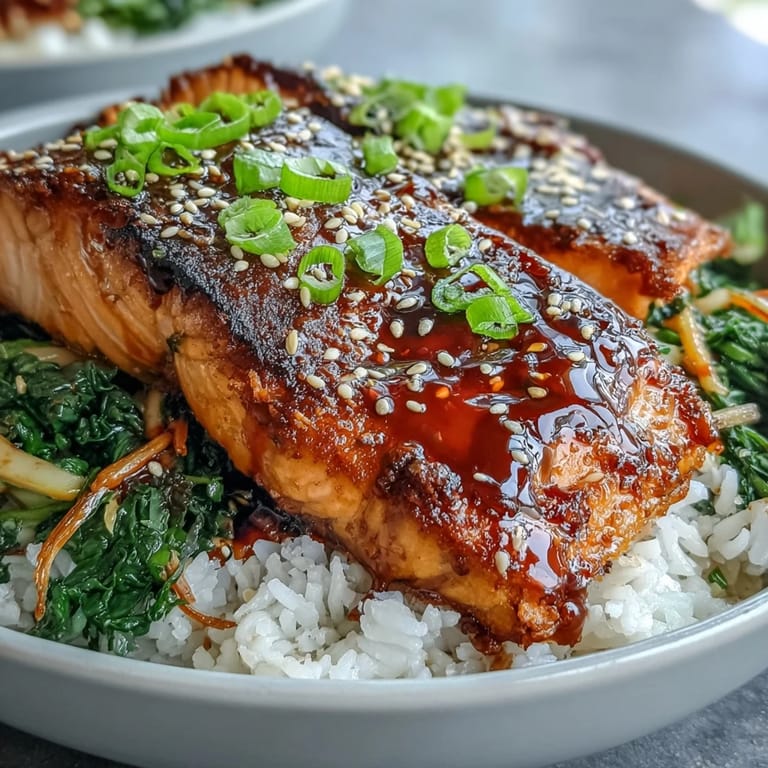
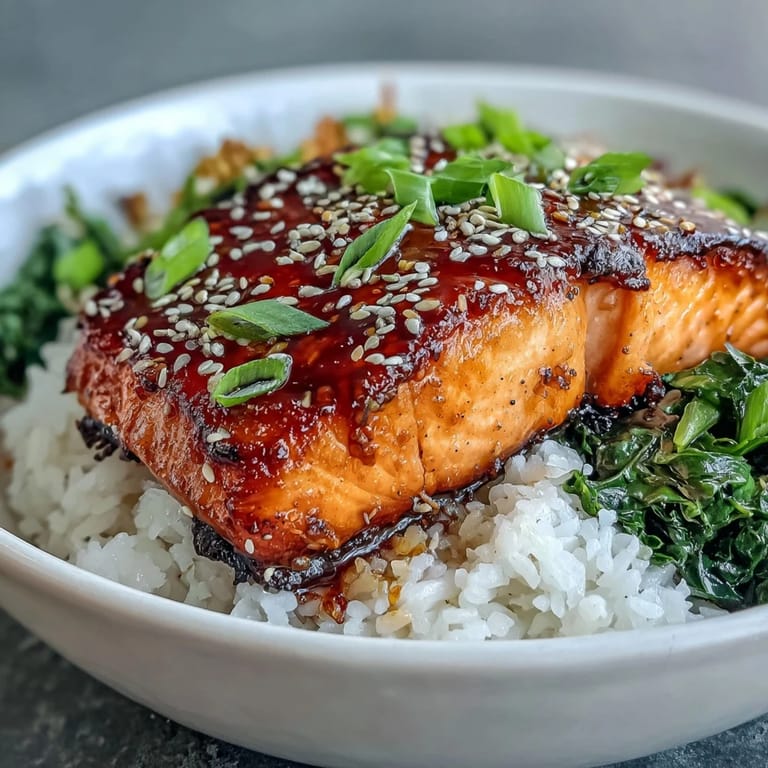
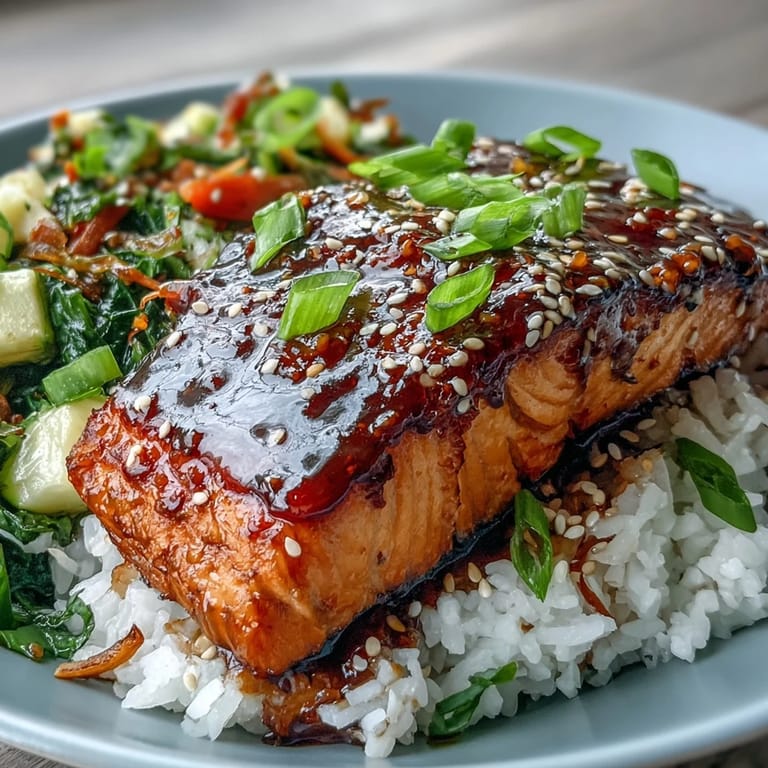
- Divide fluffy rice among bowls, arrange stir-fried vegetables on top, then nestle a teriyaki-glazed salmon fillet against the vegetables, drizzle with any extra sauce, and finish with a scatter of sesame seeds and sliced spring onions.
 Add to Pinterest
 There was this one evening when my partner and I made this together for the first time, and they were in charge of the vegetables while I handled the salmon and sauce, and we moved around the kitchen without saying much, just passing each other when we needed to, and somehow that quiet collaboration made the meal taste better than it had any right to. Food prepared alongside someone you care about carries something extra—maybe it's just the story, or maybe it's real, but either way, this bowl became a meditation on those small, shared moments in a kitchen that felt like home.
The Sauce Is Everything
I learned this the hard way by once trying to simplify and just drizzle store-bought teriyaki over the salmon, and it was immediately obvious that this homemade version—with its balance of salty, sweet, umami, and acid—is what separates a bowl you're excited to eat from one that feels generic. The garlic and ginger steep into the sauce as it simmers, becoming this invisible flavor foundation that makes people ask what you did differently. Don't skip the thickening step, either, because a thin sauce is essentially a salad dressing, and what you want here is something glossy that hugs the salmon like a lacquer.
Vegetable Timing and Temperature
Stir-frying is all about heat and speed, which sounds intimidating but is actually liberating once you stop worrying about being perfect. Your vegetables should go from raw to just-tender in a few minutes, still with color and slight crunch, because the moment they turn soft and muddy, the bowl loses its vibrancy. High heat, constant motion, and a willingness to pull everything off the stove slightly earlier than feels done—that's the rhythm.
Rice, Sauce, and the Final Assembly
The rice is really the canvas here, so using jasmine or sushi rice makes a difference because those short grains absorb sauce without becoming mushy. If you've got leftover rice from the day before, it actually works beautifully because day-old rice has a slightly firmer texture. The final drizzle of extra sauce is not decoration—it's what makes each spoonful taste balanced, so don't be shy with it.
- Warm your bowls if you have time: A hot bowl keeps everything at a better temperature and makes the meal feel more polished.
- Prep your vegetables ahead: Slice, julienne, and chop everything during those 15 minutes the rice is simmering so you're not scrambling when it's time to stir-fry.
- Make extra sauce if you're serving guests: There's always someone who wants a little more, and it's better to have it ready than to scramble mid-meal.
 Add to Pinterest
 Every time I make this bowl, it tastes exactly the same because the technique is straightforward, but it never feels repetitive because the vegetables change with seasons and someone's always discovering it for the first time. That's the kind of recipe worth keeping—one that feels both reliable and alive.
Recipe Questions & Answers
- → Can I use other types of fish?
Absolutely. While salmon works beautifully with teriyaki, you can substitute with other fatty fish like kingfish, mahi-mahi, or sea bass. Leaner fillets like cod or snapper also work well—just reduce cooking time slightly to prevent drying. The key is adjusting the cook time based on fillet thickness.
- → What's the best way to get crispy salmon skin?
Start with dry, room-temperature skin. Pat it thoroughly with paper towels before seasoning. Use a hot skillet with enough oil to create a thin layer. Press the fillet down gently when it first hits the pan to prevent curling. Don't move it for the first 3-4 minutes—let the skin crisp up undisturbed before flipping.
- → Can I make the teriyaki sauce ahead?
Yes, the teriyaki sauce keeps well in the refrigerator for up to two weeks. Store it in an airtight container and reheat gently when needed. The sauce may thicken in the fridge—just add a splash of water while reheating to reach your desired consistency. You can also freeze portions for longer storage.
- → Is there a substitute for mirin?
If you don't have mirin, you can use dry sherry or Chinese cooking wine as alternatives. For a non-alcoholic option, mix equal parts white vinegar and sugar, or use a splash of pineapple juice combined with soy sauce. These substitutions capture some of mirin's sweetness and acidity, though the flavor profile will shift slightly.
- → How do I know when the salmon is perfectly cooked?
Salmon continues cooking after leaving the heat, so remove it when it's slightly underdone in the center. Look for the flesh to turn opaque and flake easily with a fork—this usually happens at an internal temperature of 125°F (52°C) for medium. The center should still look slightly translucent. For well-done, aim for 145°F (63°C).