 Add to Pinterest
 There was a morning when my neighbor brought over a box of crullers from a little French patisserie downtown, still warm and glossy with glaze, and I realized I'd been missing something essential from my kitchen repertoire. The way they crackled when you bit through that delicate shell, only to find an impossibly tender, almost custardy center—it felt like magic trapped in fried dough. I spent the next week hunting down recipes, asking bakers questions that probably seemed obvious, and finally understanding the alchemy of choux pastry. Now these twisted beauties are what I make when I want to feel a little bit fancy without pretending I'm doing anything complicated.
I made these for my parents one Sunday and watched my mother's face light up in that particular way it does when she tastes something that reminds her of a trip to Paris from decades ago. My father, less sentimental, simply asked if I had more while dunking his into coffee. That's when I knew I'd cracked the code.
Ingredients
- Water and butter: These create the base that puffs up into those trademark air pockets; cold butter cut into pieces helps it distribute evenly.
- All-purpose flour: Don't sift unless your flour is truly lumpy; the exact amount matters more than you'd think.
- Room temperature eggs: This is non-negotiable for smooth incorporation and proper structure—cold eggs will seize the dough.
- Powdered sugar and milk: The glaze should be pourable but thick enough to coat; adjust milk gradually until it feels right.
- Neutral oil: I use sunflower oil because it has a higher smoke point and doesn't impart flavor.
Tired of Takeout? 🥡
Get 10 meals you can make faster than delivery arrives. Seriously.
One email. No spam. Unsubscribe anytime.
Instructions
- Build the foundation:
- Combine water, butter, sugar, and salt in a saucepan and bring to a boil, letting the butter melt completely into the liquid. This step matters because you're creating the perfect environment for flour to hydrate evenly.
- Introduce the flour:
- Add all the flour at once and stir vigorously with a wooden spoon for about 2 minutes until the mixture pulls away from the pan in a cohesive ball, leaving the edges clean. You'll feel the transformation happen under your spoon.
- Cool and rest:
- Let the dough sit for 3–5 minutes off heat so it's comfortable to touch but still warm—this prevents the eggs from cooking when you add them.
- Incorporate eggs with patience:
- Add eggs one at a time, beating well after each addition until the dough is smooth and glossy before the next egg goes in. This builds structure and ensures even rising.
- Pipe into perfect twists:
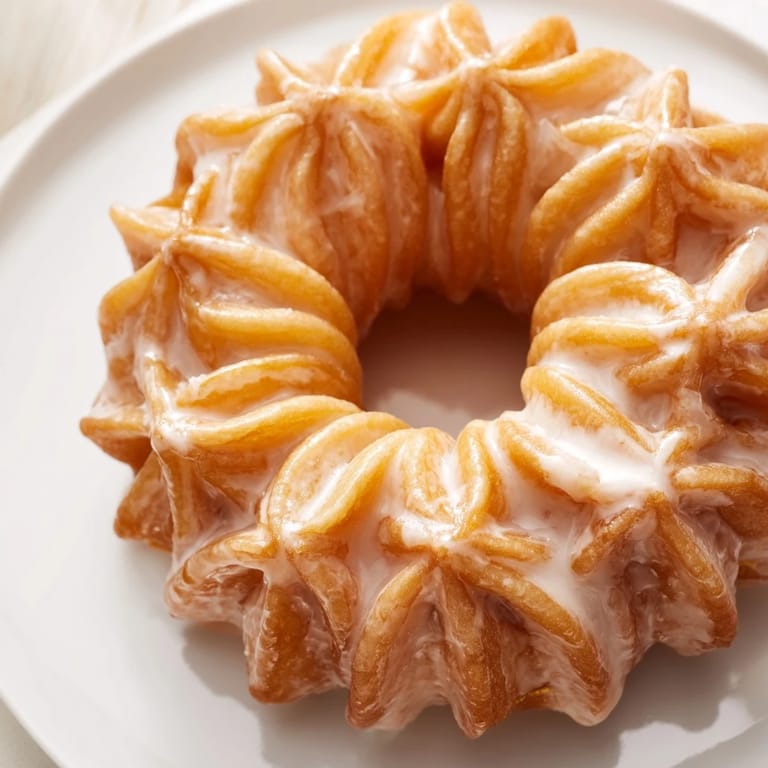
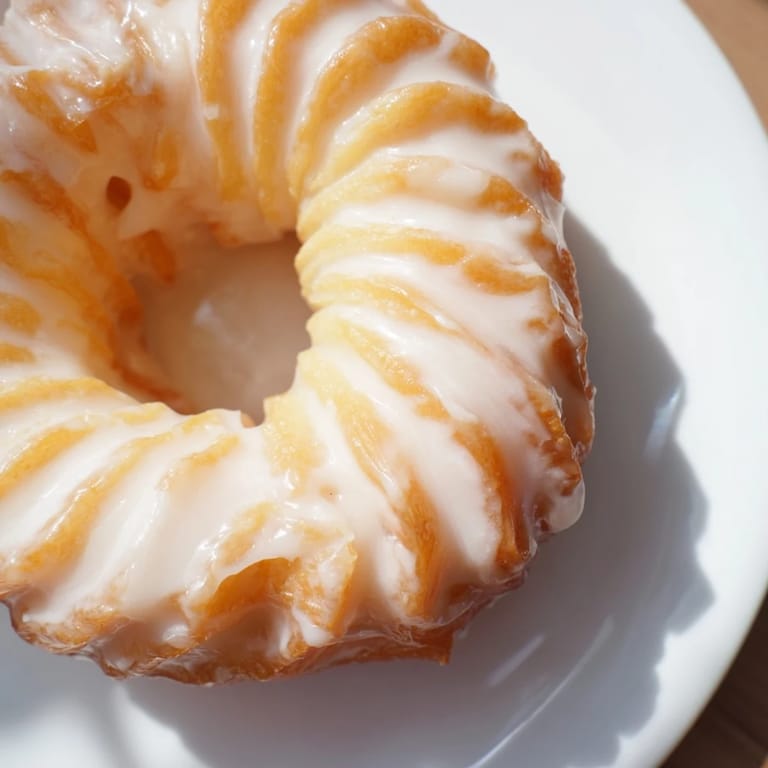
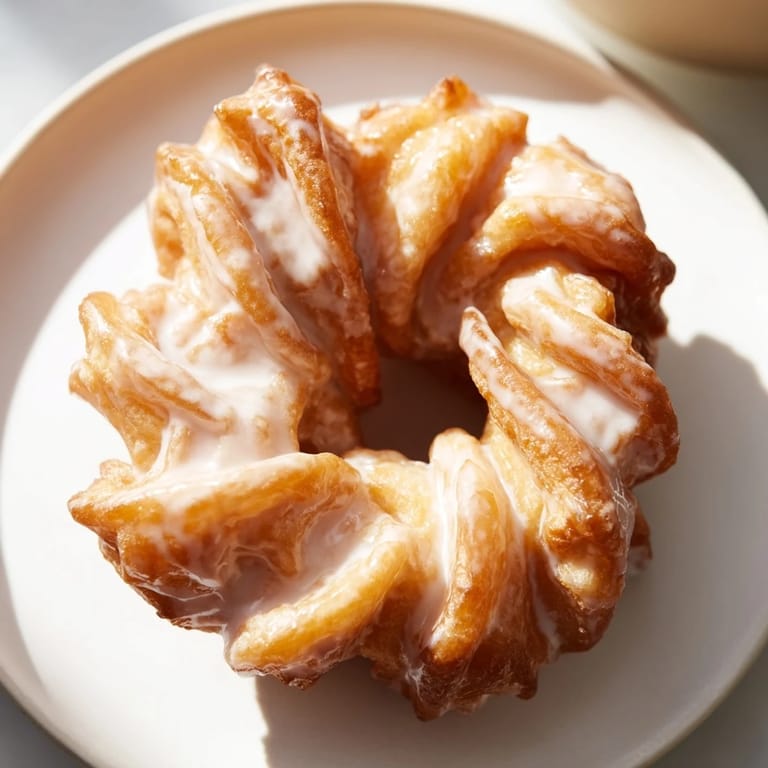
- Transfer dough to a piping bag fitted with a large star tip and pipe 3-inch rings onto parchment squares, creating those signature ridged circles. The ridges from the star tip aren't just for looks—they help with even frying.
- Heat oil with precision:
- Use a thermometer and bring oil to exactly 350°F (175°C); too cool and they absorb oil, too hot and they brown before puffing. This temperature is your constant.
- Fry with the parchment trick:
- Carefully slide 2–3 crullers (parchment still attached) into the oil, parchment side down. After 1–2 minutes, gently peel off the parchment with tongs and continue frying until golden on both sides, about 2–3 minutes more per side.
- Drain thoroughly:
- Remove with a slotted spoon and let them rest on a wire rack rather than paper towels—racks let air circulate underneath, keeping them from getting soggy.
- Glaze while warm:
- Whisk powdered sugar, milk, and vanilla into a smooth glaze, then dip each warm cruller quickly, letting excess drip back into the bowl. Warm crullers absorb the glaze better.
 Add to Pinterest
 There's something almost meditative about watching these humble rings transform in hot oil, puffing up into something that looks completely different from what went in. My kid once asked why they're called "twists" and I realized I'd never actually explained it—now we call them "golden treasure rings" instead, which feels more accurate to how they're treated around here.
The Choux Pastry Mystery Solved
Choux pastry seems intimidating until you understand what's actually happening: you're cooking flour into a paste, letting steam escape during the initial heating so the dough firms up, then adding eggs to create structure and lift. Once you see the dough transform from shaggy to glossy with each egg addition, you realize there's nothing mysterious about it. This same dough makes éclairs, profiteroles, and Paris-Brest—learn it once and you've unlocked an entire category of pastries.
The Temperature Question
Oil temperature makes the difference between crullers that taste like greasy sponges and ones that are actually delicious. Too cool and they greedily absorb oil; too hot and they brown before the interior finishes cooking, leaving you with a crispy shell and doughy center. I keep a thermometer clipped to the side of my pot now—it's the small investment that changed everything about my frying.
Variations and Moments
Once you've mastered the basic cruller, the real fun begins with customization.
- Add lemon or orange zest to the glaze for brightness that cuts through the richness.
- Dust warm crullers with cinnamon sugar instead of glazing them for a different texture entirely.
- Make these ahead by preparing the dough and piping it onto parchment squares, then freezing them in a single layer before frying—they don't need thawing and actually fry beautifully from frozen.
 Add to Pinterest
 These crullers are the kind of thing that makes your kitchen smell like a French bakery and your people happy, which is really all that matters. Enjoy them with strong coffee and the knowledge that you've genuinely impressed yourself.
Recipe Questions & Answers
- → What dough is used for crullers?
Choux pastry forms the base, creating a light and airy texture with a tender eggy interior.
- → How should crullers be cooked?
They are deep-fried in neutral oil at 350°F (175°C) until golden and puffed, ensuring a crisp outside.
- → Can crullers be baked instead of fried?
Yes, baking at 400°F (200°C) for 20-25 minutes yields a less crisp but still flavorful result.
- → What gives crullers their twisted shape?
The choux dough is piped through a large star tip into twisted rings before cooking.
- → How is the sweet glaze made?
A simple mix of powdered sugar, milk or water, and vanilla extract is whisked to a smooth glaze for coating.