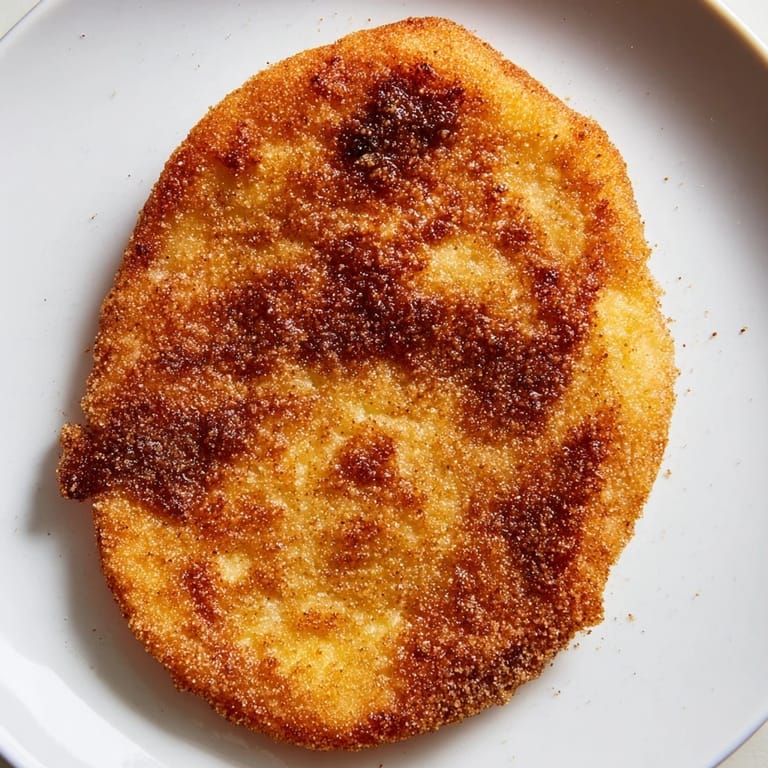
 Add to Pinterest
 My aunt made elephant ears once at a county fair, and I watched her stretch the dough so thin it was nearly translucent, the heat from the oil making her face glow as she dropped each piece in. She never measured anything—just knew by feel when the dough was ready, when the oil was hot enough. Years later, I decided to recreate that memory in my own kitchen, and the moment that first stretched oval hit the hot oil and puffed up golden, I understood why she'd smiled so much that day.
I made these for my kids on a lazy Saturday afternoon when we couldn't afford to drive to the fair, and they stood at the stove with cinnamon sugar all over their faces, fighting over who got to dredge the next one. One fell on the floor—and yes, someone tried to eat it anyway. It became this small, silly family moment that I think about every time I smell cinnamon and frying dough together.
Ingredients
- Active dry yeast (2¼ teaspoons): This is your dough's best friend; it's what makes them puff and become gloriously light instead of dense and chewy.
- Warm milk (1 cup): The warmth wakes up the yeast, but if it's too hot you'll kill it, so aim for that perfect 110°F—your pinky should stay comfortable in it for 10 seconds.
- Granulated sugar (2 tablespoons for dough, ½ cup for topping): A little in the dough feeds the yeast and adds subtle sweetness, while the topping sugar is your crispy, caramelized shell.
- Unsalted butter (melted): This enriches the dough and gives it that tender, slightly flaky crumb if you work it in right.
- Salt (½ teaspoon): Don't skip this; it balances the sweetness and strengthens the gluten.
- All-purpose flour (2½ to 3 cups): Start with 2½ cups and add more slowly if needed—humidity in your kitchen will affect how much you actually need.
- Vegetable oil (3 cups): You need enough depth for the dough to float and puff, so don't skimp; a shallow pan means uneven cooking.
- Ground cinnamon (2 teaspoons): This is the flavor that makes people close their eyes when they bite in.
Tired of Takeout? 🥡
Get 10 meals you can make faster than delivery arrives. Seriously.
One email. No spam. Unsubscribe anytime.
Instructions
- Wake the yeast:
- Pour warm milk into a bowl, sprinkle the yeast and sugar over it, and wait. You'll see it foam up after about 5 minutes—that's your signal that the yeast is alive and ready to work.
- Build the dough:
- Stir in the melted butter and salt, then gradually add flour, mixing as you go. You want a soft, slightly sticky dough that comes together smoothly without being gluey.
- Knead until elastic:
- Work the dough on a floured surface for about 5 minutes until it becomes smooth and springy to the touch. This develops the gluten, which helps the dough hold air.
- Let it rise:
- Grease a bowl, place the dough inside, cover it loosely with plastic wrap or a clean towel, and leave it in a warm spot—like the oven with the light on, or near a sunny window. Wait until it doubles, about an hour.
- Prepare your toppings:
- Mix the cinnamon and sugar together in a shallow dish so it's ready to go the second your elephant ears come out of the oil.
- Shape the dough:
- Punch down the risen dough—this releases some of the air so you can start fresh. Divide it into 8 pieces, roll each into a ball, then gently stretch each ball into a thin oval about 8 inches long. Don't worry if they're not perfect; irregular shapes are actually more charming.
- Heat your oil:
- Bring the oil to 350°F in a large, deep skillet or Dutch oven. If you don't have a thermometer, drop a tiny piece of dough in—it should sizzle immediately and float to the surface.
- Fry until golden:
- Carefully lay one or two stretched ovals into the hot oil and fry for about a minute on each side until they're puffed, golden, and slightly crispy. They'll feel delicate, but they're tougher than you think.
- Finish with cinnamon sugar:
- Drain each one briefly on paper towels, then brush lightly with melted butter if you like, and immediately dredge both sides in the cinnamon sugar while they're still warm. The warmth helps the sugar stick.
 Add to Pinterest
 There's something almost magical about the moment when that flat, stretched dough hits the hot oil and transforms into something puffy and golden in seconds. It feels like kitchen magic, and it's one of those small, repeatable miracles that never gets old.
The Right Temperature Matters
I learned this the hard way—my first batch of elephant ears came out greasy and limp because I was too nervous about the heat and kept it too low. Now I use a thermometer religiously because 350°F is the sweet spot where the outside crisps and puffs before the inside gets a chance to drink in oil. If you don't have a thermometer, a simple test is to drop a small piece of dough in; it should sizzle and float immediately to the surface.
Variations to Try
The base recipe is perfect as is, but I've experimented with adding a pinch of nutmeg to the dough for a spice-forward version, or swapping half the milk for buttermilk for a tangier bite. Some people brush them with a thin glaze of honey after frying, and I've seen versions dusted with powdered sugar instead of cinnamon sugar. The beauty of this recipe is that it's forgiving enough to play with.
Serving and Storage
Elephant ears are best eaten within an hour of frying while they're still warm and crispy, though they'll keep in an airtight container for a day or two—just refresh them in a 300°F oven for a few minutes to restore some crispness. They're perfect with a drizzle of chocolate sauce, a dollop of jam, or just eaten plain with a cold glass of milk.
- Serve them warm for maximum crispiness and that perfect contrast between crispy outside and tender inside.
- If you're making these ahead, you can freeze the shaped dough pieces and fry them straight from frozen—add just a minute more to the frying time.
- Have plenty of napkins on hand; these are gloriously messy to eat, and that's half the fun.
 Add to Pinterest
 These are the kind of recipe that connects you to something bigger—a fair, a childhood memory, a moment shared with someone you love. They're simple enough for a beginner and satisfying enough to make again and again.
Recipe Questions & Answers
- → What type of dough is used for elephant ears?
The dough is a yeast-based mixture made with warm milk, sugar, melted butter, salt, and all-purpose flour, resulting in a soft and elastic texture.
- → How do you achieve the crispy texture?
Thinly stretched dough is deep fried at 350°F until golden and puffed, producing a crispy exterior.
- → Can the dough be prepared ahead of time?
Yes, the dough can be refrigerated for up to 12 hours before frying without compromising quality.
- → What are common toppings for elephant ears?
A classic topping is a mixture of granulated sugar and ground cinnamon, sometimes brushed with melted butter for added richness.
- → Are there flavor variations recommended?
Adding a pinch of nutmeg to the dough or serving elephant ears with chocolate sauce, jam, or honey can enhance the flavor profile.