 Add to Pinterest
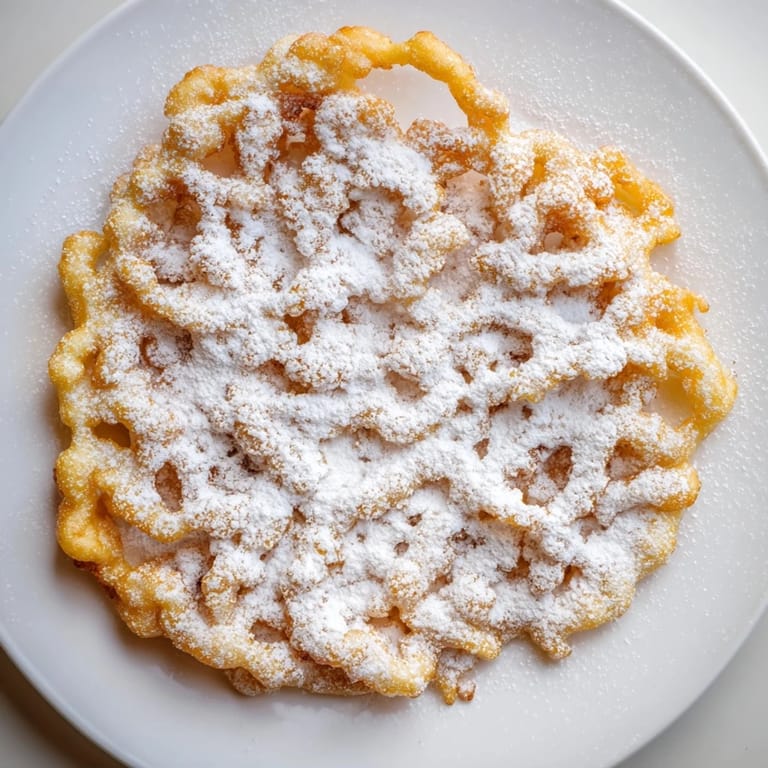
 The first time I made funnel cakes at home, I felt ridiculous pouring batter through a kitchen funnel while my partner watched from the counter. But the moment that golden, lacy cake hit the oil and puffed up into something that actually looked like the fairground version, we both laughed. There's something magical about watching a simple batter transform into something so theatrical and delicious. It became our go-to dessert for unexpected guests, the kind of thing that makes people feel like they're getting a treat.
I'll never forget making a batch for my nephew's ninth birthday party—six kids crowded around the kitchen watching the oil bubble and sizzle, eyes wide as the funnel cakes emerged golden and puffed. One kid declared it was "better than the fair," which might be the highest compliment a homemade dessert can receive. That moment sealed it for me: this recipe isn't just about taste, it's about creating a moment worth remembering.
Ingredients
- All-purpose flour: The foundation that gives structure without being heavy, 2 cups provides enough for a light, airy batter.
- Granulated sugar: Just 2 tablespoons sweetens without overwhelming the delicate flavor—these are meant to shine with toppings anyway.
- Baking powder: A teaspoon is the secret to that characteristic puff and lacy texture that makes funnel cakes special.
- Salt: A half teaspoon balances everything and makes the vanilla sing.
- Eggs: Two large ones bind and enrich, giving the cake structure and tender crumb.
- Whole milk: One and a half cups creates a pourable batter, the right consistency for flowing through a funnel without being thin or runny.
- Vanilla extract: A teaspoon adds warmth and depth without being obvious.
- Vegetable oil: About a quart for frying at the right depth, essential for that crispy golden exterior.
- Powdered sugar: The final flourish, best applied while cakes are still warm so it clings to the lacy edges.
Tired of Takeout? 🥡
Get 10 meals you can make faster than delivery arrives. Seriously.
One email. No spam. Unsubscribe anytime.
Instructions
- Build your dry foundation:
- Whisk together flour, sugar, baking powder, and salt in a large bowl until everything is evenly distributed. This prevents lumps later and ensures even rising.
- Prepare the wet team:
- In a separate bowl, beat the eggs lightly, then whisk in milk and vanilla extract until combined. Keeping wet and dry separate until the last moment is the key to a smooth, lump-free batter.
- Bring them together:
- Gradually pour the wet ingredients into the dry, whisking gently as you go—overmixing creates tough cakes, so stop as soon as no flour streaks remain. The batter should flow easily through a funnel but shouldn't be watery; adjust with a splash of milk if it seems too thick.
- Heat your oil properly:
- Pour oil into a deep skillet or heavy pot to about 2 inches deep, then heat it to 375°F (190°C). Use a thermometer here—too cool and your cakes will be greasy, too hot and they'll brown before cooking through.
- Master the funnel technique:
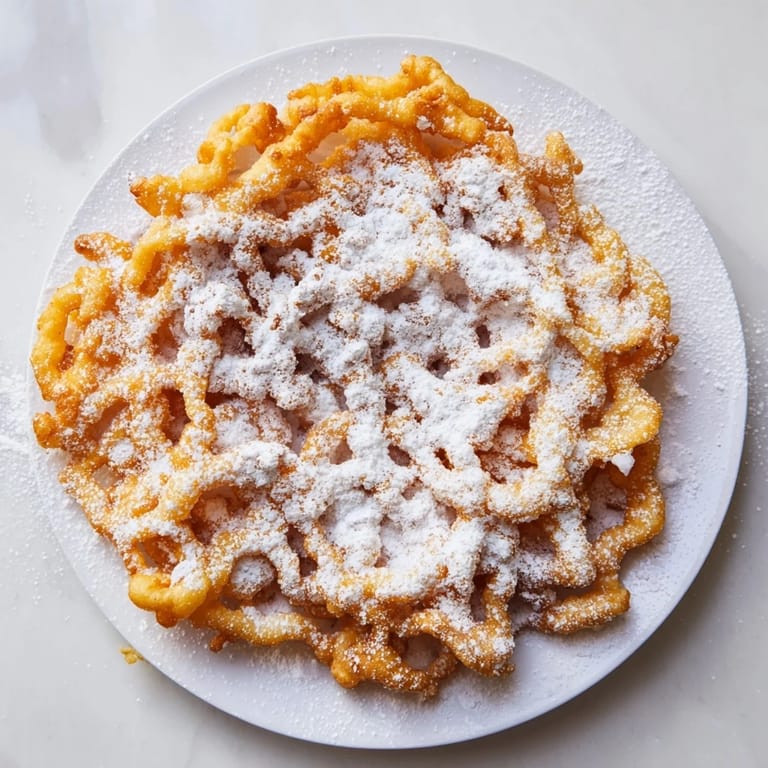
- Pour about half a cup of batter into your funnel or squeeze bottle and hold your finger over the opening until you're over the hot oil. Release your finger and move the funnel in a continuous swirling pattern, creating that signature lacy web—this takes maybe ten seconds of practiced spiraling.
- Fry to golden perfection:
- Let each funnel cake cook for one to two minutes per side until deeply golden brown, then carefully flip with tongs. They'll be delicate at first but firm up as they cool, so handle gently.
- Finish and serve:
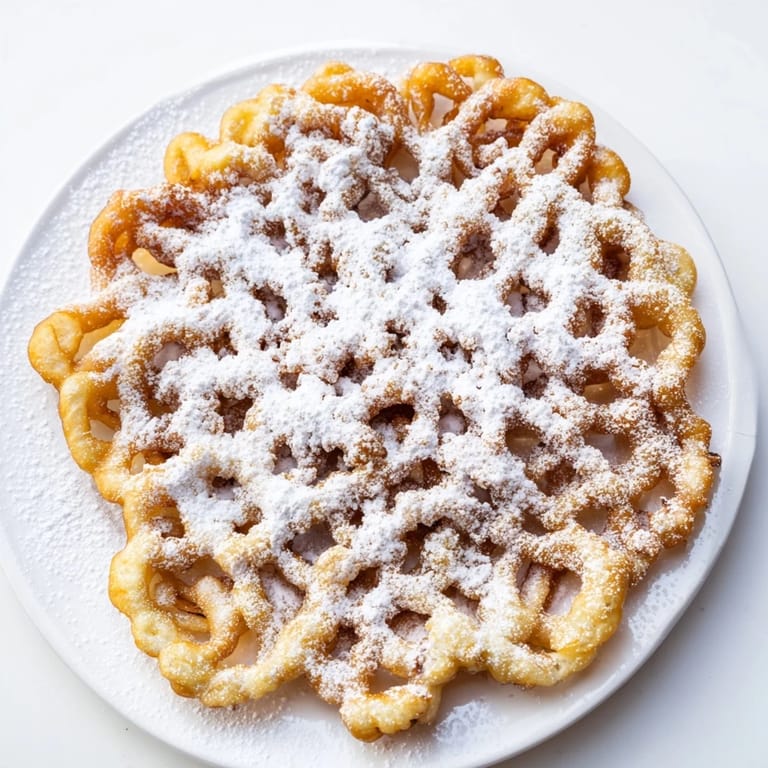
- Drain on paper towels for a moment to shed excess oil, then generously dust with powdered sugar while still warm. Serve immediately—the texture starts changing within minutes as the crispy exterior softens.
 Add to Pinterest
 There was an afternoon when my friend Sarah stopped by unexpectedly, and instead of suggesting coffee, I remembered I had everything for funnel cakes in the kitchen. Twenty minutes later we were standing at the stove with powdered sugar dusting our hands, laughing about how something so simple could feel so celebratory. That's when I realized these cakes are less about the recipe itself and more about what you do with them—they're an excuse to slow down and share something warm with someone you care about.
The Batter Science
The magic of funnel cakes lives in how the batter hits hot oil—it sets on the outside while staying tender inside, creating those gorgeous lacy edges. The baking powder is crucial here because it activates in the heat, creating tiny bubbles that make the cake light and crispy rather than dense. I learned to respect this chemistry by watching what happened when I tried to make funnel cakes with leftover pancake batter (a mistake I made exactly once). The batter needs that slight sweetness and vanilla to stand on its own because the real glory comes from the texture and what you put on top.
Beyond Powdered Sugar
While a simple dusting of powdered sugar is a classic for good reason, I've discovered that funnel cakes are actually a blank canvas waiting for your favorite toppings. A cinnamon-sugar blend transforms them into something more dessert-like, while a cocoa dusting feels almost decadent. Fresh berries pooled on top bring brightness, chocolate sauce makes them indulgent, and whipped cream feels like you're treating yourself to something special.
Timing and Temperature Matter
The difference between a transcendent funnel cake and a mediocre one often comes down to details that seem small until you've lived them. Oil temperature is the biggest one—a thermometer takes the guesswork out of frying, and watching that golden color develop is part of the pleasure. Serving them immediately is non-negotiable; they're crispy warm from the pan and turn soft within minutes as they cool and absorb moisture from the air. If you're making a batch for guests, fry them just before eating rather than all at once and reheating.
- Keep your funnel or squeeze bottle in easy reach so you can move from batter to oil without hesitation.
- If you don't have a proper candy thermometer, a wooden skewer tossed in the oil should sizzle immediately—if nothing happens, it's not hot enough yet.
- Make a small test cake first if you're nervous about consistency; it's easier to adjust batter thickness after a practice run.
 Add to Pinterest
 Funnel cakes remind me that sometimes the most memorable desserts aren't complicated—they just need good ingredients, the right temperature, and someone to share them with. Make these when you want to feel like the fair came to your kitchen.
Recipe Questions & Answers
- → What batter consistency is best for funnel cakes?
The batter should be smooth and pourable but not too thin, allowing it to hold a lacy shape when drizzled into hot oil.
- → How hot should the oil be for frying?
Heat the oil to approximately 375°F (190°C) to ensure a crispy and golden exterior without absorbing excess oil.
- → Can I add flavors to the powdered sugar dusting?
Yes, cinnamon or cocoa powder can be mixed with the powdered sugar to add a subtle twist to the classic sweetness.
- → Are there alternatives for dairy or gluten in this dish?
Use a gluten-free flour blend and plant-based milk substitutes to accommodate gluten-free or dairy-free preferences.
- → What tools help achieve the classic funnel cake shape?
Using a funnel or squeeze bottle to pour the batter in swirling motions helps create the traditional lacy shapes.
- → How can I serve funnel cakes for extra indulgence?
Top freshly fried funnel cakes with fresh berries, chocolate sauce, or whipped cream to enhance flavors and presentation.