 Add to Pinterest
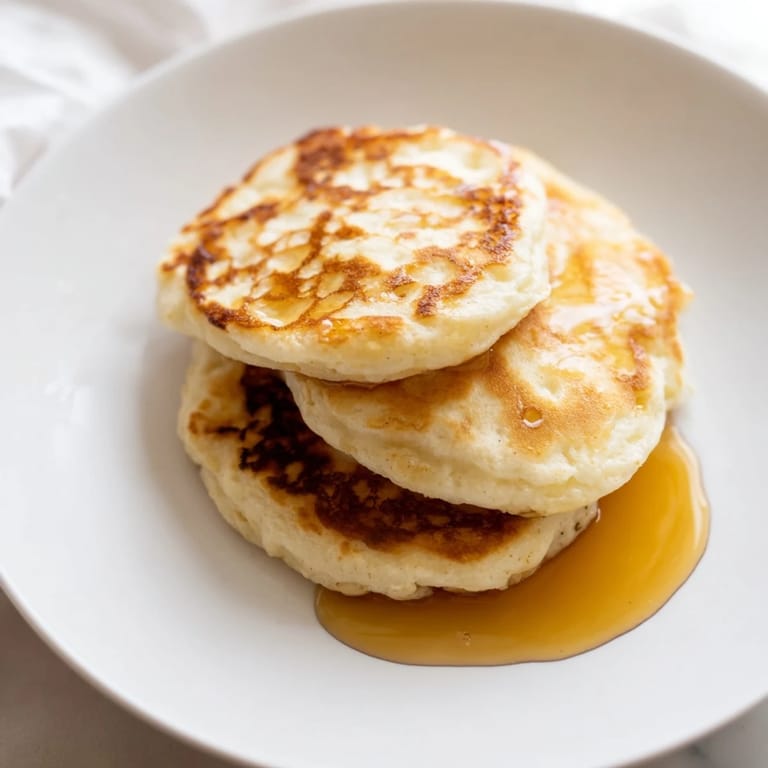
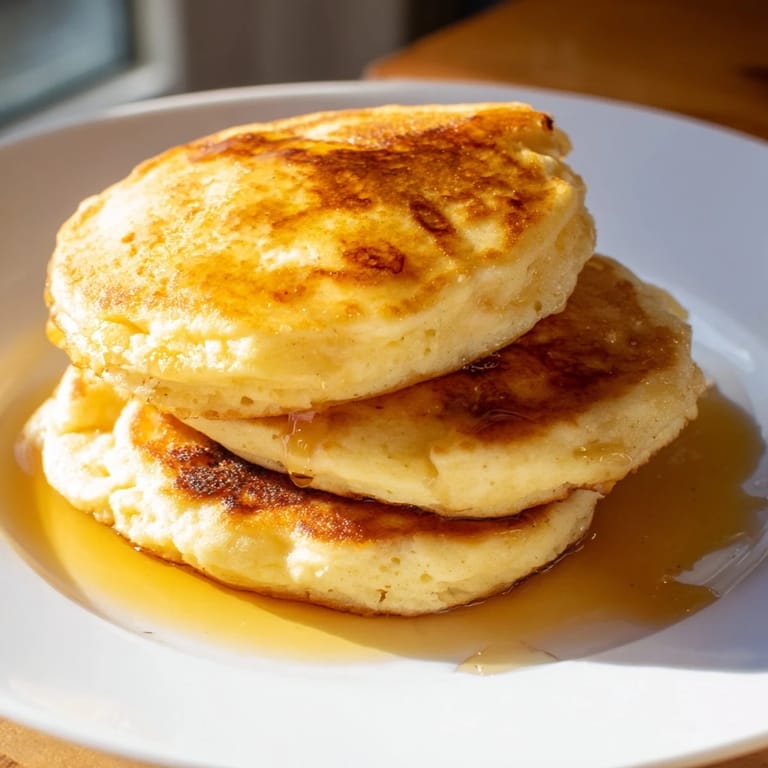
 My neighbor mentioned once that cottage cheese pancakes sounded weird until she tried mine, and suddenly she was asking for the recipe every Sunday morning. I'd stumbled onto them by accident, really—a half-empty container of cottage cheese in the fridge and the need to use eggs before they went bad. What surprised me most was how tender and almost cloud-like they became, nothing like the dense pancakes I expected. That subtle tang cuts through sweetness in a way that makes you want another stack immediately.
I made these for a friend's brunch party once and watched everyone's skeptical faces turn delighted the moment they took a bite. There's something special about serving food that surprises people in the best way, and these pancakes do exactly that. The cottage cheese stays subtle enough that it's more about texture than flavor—tender, pillowy, refined.
Ingredients
- Cottage cheese (1 cup): Full-fat holds up beautifully, but low-fat works fine too; the tanginess is what matters here, so don't skip it for milder dairy.
- Milk (1/4 cup): Just enough to loosen the batter without making it runny; use whatever you have on hand.
- All-purpose flour (3/4 cup): Keep your hand light with this—overmixing is the enemy of tender pancakes.
- Sugar (1 tbsp): A modest amount lets the cottage cheese flavor shine through instead of drowning it out.
- Baking powder (1/2 tsp): This is your lift; make sure it's fresh or the pancakes won't rise properly.
- Salt (1/4 tsp): A small pinch that amplifies flavor without making anything taste salty.
- Eggs (3 large): These bind everything and add richness; room temperature eggs mix more smoothly.
- Vanilla extract (1 tsp): A touch of warmth that rounds out the tang beautifully.
- Butter or oil (2 tbsp): Butter gives better flavor, but oil works if that's what you've got; use just enough so pancakes don't stick.
Tired of Takeout? 🥡
Get 10 meals you can make faster than delivery arrives. Seriously.
One email. No spam. Unsubscribe anytime.
Instructions
- Blend the wet base:
- Whisk cottage cheese, eggs, milk, and vanilla together until it looks mostly smooth—a few tiny curds are completely fine and actually add nice texture. This step takes just a minute or two.
- Mix the dry team:
- Combine flour, sugar, baking powder, and salt in a separate bowl so everything blends evenly when you bring them together.
- Bring them together gently:
- Pour the dry mixture into the wet ingredients and stir just until combined—lumpy is your friend here, not smooth. A thick batter means tender pancakes; overmixing means tough ones.
- Heat your cooking surface:
- Warm a nonstick skillet or griddle over medium heat and add a small pat of butter or a drizzle of oil. Let it coat evenly and heat for about a minute until it shimmers.
- Build each pancake:
- Scoop about 1/4 cup of batter onto the hot skillet and spread it slightly if it doesn't naturally flatten—this batter is thick and behaves differently than traditional pancake batter. You'll fit 2–3 pancakes comfortably on a standard skillet.
- Watch for the flip signal:
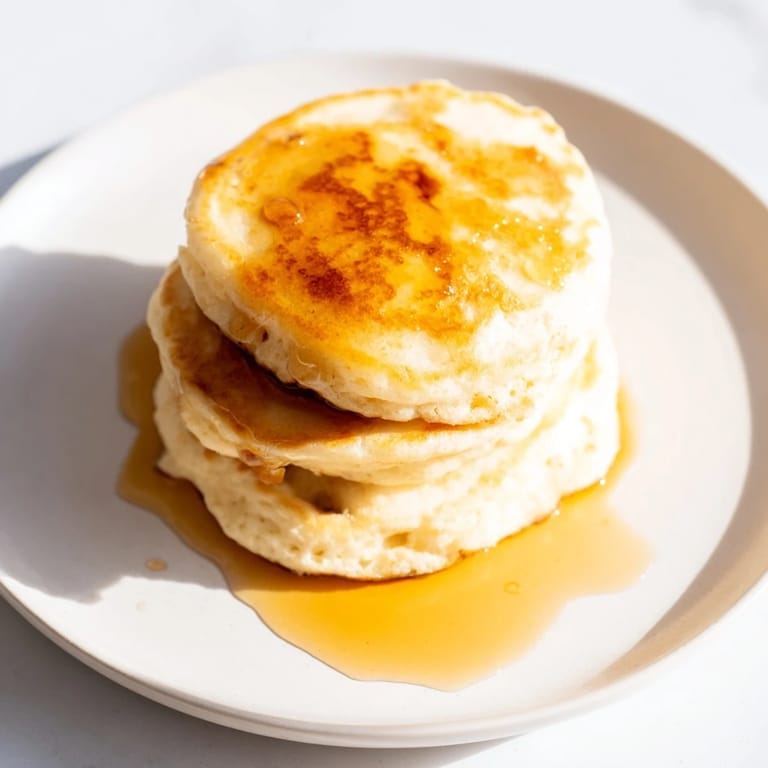
- Cook for 2–3 minutes until bubbles form across the top surface and the edges look set and slightly dry. This visual cue tells you the bottom has golden-brown anchor without burning.
- Flip and finish:
- Turn each pancake carefully and cook 1–2 minutes more on the second side until it's golden and a toothpick inserted comes out clean. Don't press down with your spatula or you'll squash all that air.
- Keep the batch warm:
- As you finish each batch, slide them onto a plate and cover loosely with foil so they stay warm while you cook the rest. Adding a bit more butter or oil between batches prevents sticking.
 Add to Pinterest
 I remember my daughter pushing her plate away at first, convinced cottage cheese in pancakes was a mistake. Then she tasted one and went quiet for a moment before asking if I could make them every weekend. That's when I knew these weren't just pancakes—they were breakfast magic.
Variations That Work Beautifully
Cinnamon is an easy upgrade; just add 1/4 teaspoon to the dry ingredients and suddenly everything tastes warmer and more autumn-like. Lemon zest brings brightness and cuts the richness in a way that makes them feel almost refreshing on a heavy morning. I've even tried cardamom once, which sounds fancy but honestly just makes you feel fancy eating breakfast.
The Topping Question
Fresh berries are the obvious choice and they genuinely shine here—the tartness plays off the cottage cheese tang in a way that feels intentional. Honey drizzled warm makes them feel indulgent; maple syrup keeps it classic; even jam works if that's what you love. A dollop of sour cream or Greek yogurt adds another layer of subtle tang that some people prefer to extra sweetness.
Make Ahead and Storage
These freeze beautifully for up to three weeks, which I discovered accidentally one Saturday and now do on purpose. Just let them cool completely, stack them with parchment between layers, and slide them into a freezer bag. Reheat them in a toaster or a warm skillet and they come back almost exactly as good as fresh—maybe even better because you get to enjoy them on a morning you really need them.
- Cold pancakes taste fine straight from the fridge if you're in a true rush, though they're better warmed.
- Keep them covered if stacking so they don't dry out completely in the cold.
- They'll keep in the fridge for about three days if you decide to make a double batch and eat them throughout the week.
 Add to Pinterest
 These pancakes changed something small but real about how I think about breakfast, turning a practical meal into something worth waking up for. Once you've made them once, you'll keep making them.
Recipe Questions & Answers
- → What makes these pancakes light and fluffy?
The inclusion of cottage cheese adds moisture and a tender texture, while baking powder helps the batter rise for a fluffy result.
- → Can I substitute whole wheat flour in the batter?
Yes, whole wheat flour can be used to create a heartier version, although the texture may be slightly denser.
- → How should I cook the pancakes for best results?
Cook them on medium heat in a nonstick skillet or griddle using butter or neutral oil until bubbles appear on the surface before flipping.
- → Are there any flavor additions recommended?
Adding cinnamon or lemon zest to the batter enhances the flavor subtly without overpowering the cottage cheese.
- → Can these pancakes be frozen and reheated?
Yes, they freeze well and can be reheated in a toaster or skillet for convenience.