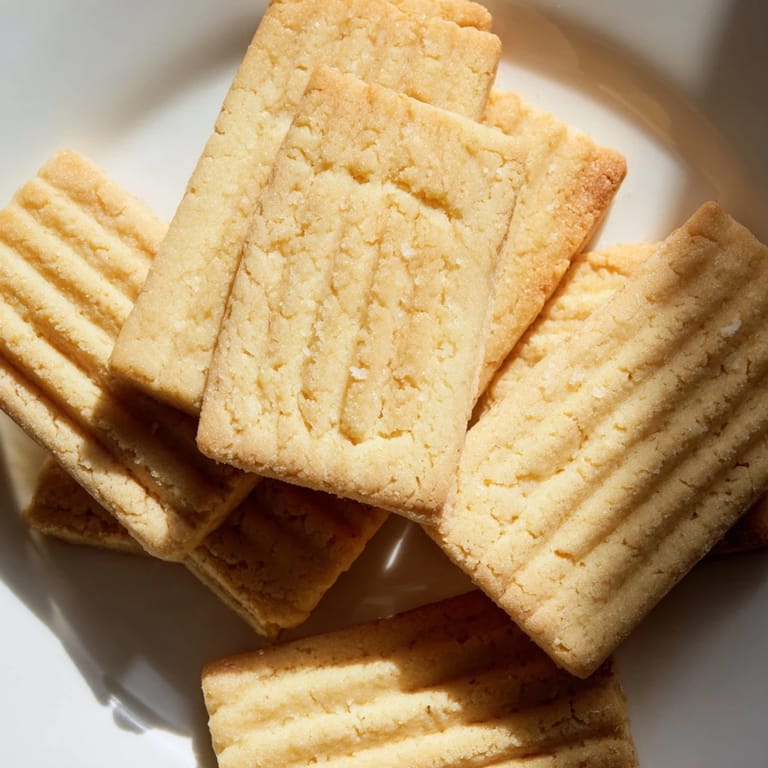
 Add to Pinterest
 There's something almost meditative about making shortbread—the way butter and sugar surrender under the wooden spoon, how the kitchen fills with that toasted, buttery warmth while they bake. I learned to make these from my grandmother's handwritten notes, though she always said the real secret was in knowing when to stop stirring, a lesson that took me three batches to truly understand. The first time I got them right, they shattered like glass between my teeth, and I knew I'd finally grasped what she meant about restraint in the kitchen.
I made a batch for my neighbour when she was having a rough week, and she sat on my kitchen stool eating them straight from the cooling rack, crumbs everywhere, telling me stories about her garden. That's when I realized these cookies do something beyond tasting good—they create a moment, a pause in the day, something to share that feels both simple and special.
Ingredients
- Unsalted butter, softened (1 cup / 225 g): This is the foundation, so use good quality and let it soften completely—cold butter won't cream properly and you'll lose that essential lightness.
- Granulated sugar (½ cup / 100 g): The modest amount keeps these delicate rather than sweet, letting the butter shine through.
- All-purpose flour (2 cups / 240 g): Weight matters more than volume here; too much flour makes them tough and dense.
- Cornstarch (¼ cup / 30 g): This is the secret weapon—it creates that distinctive crumbly, tender crumb that makes shortbread different from regular cookies.
- Fine sea salt (¼ tsp): Just enough to heighten the butter flavour without tasting salty.
Tired of Takeout? 🥡
Get 10 meals you can make faster than delivery arrives. Seriously.
One email. No spam. Unsubscribe anytime.
Instructions
- Set your stage:
- Preheat to 325°F and line your pan with parchment paper so you're ready to go the moment your dough is shaped. This temperature is gentler than standard baking; you're aiming for pale gold, never deep brown.
- Cream the butter and sugar:
- Beat them together until the mixture looks light, fluffy, and almost pale—this takes a few minutes and aerates the dough. You'll know it's ready when it feels like soft clouds under the spoon.
- Fold in the dry ingredients:
- Sift the flour, cornstarch, and salt directly over the butter mixture, then gently stir until the dough just comes together. The moment it does, stop—overworking develops gluten and makes shortbread tough instead of tender.
- Shape and score:
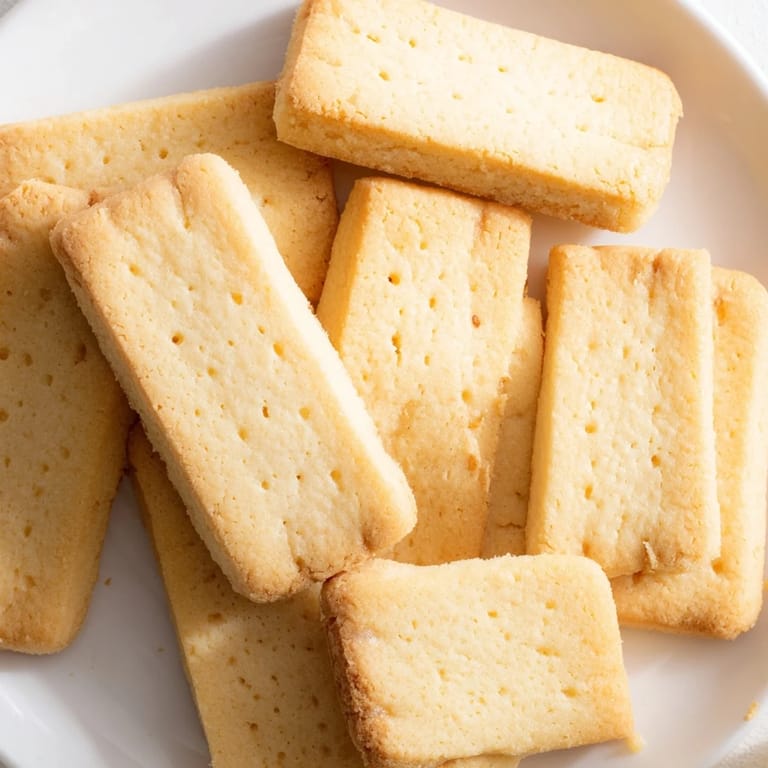
- Press the dough evenly into your pan or onto the baking sheet, then score it lightly with a sharp knife into wedges or fingers before it bakes. Prick each piece gently with a fork—this helps them bake evenly and gives them that traditional look.
- Bake with patience:
- Watch for pale golden edges, which usually takes 22-25 minutes at this lower temperature. The centres will still look slightly soft when you pull them out, but they firm up as they cool.
- Cool and cut:
- Let them rest in the pan for 5 minutes so they set just enough to cut cleanly, then carefully cut along your scored lines. Transfer to a rack and let them cool completely before eating, though I admit I always steal one while it's still warm.
 Add to Pinterest
 I remember my daughter asking why her homemade shortbread never turned out like mine, and when I watched her make them again, I saw her overworking the dough, worried she hadn't mixed it enough. The moment I told her that less stirring was actually the goal, something clicked—she made a perfect batch that afternoon and hasn't looked back.
Why the Scottish Way Works
Scottish shortbread is built on a principle: butter, sugar, flour, restraint. There's no vanilla, no eggs, no vanilla extract muddying the pure, rich flavour of butter and caramelized sugar. The cornstarch's inclusion isn't a modern shortcut—it's traditional, used for centuries because it creates that distinctly tender, sandy crumb that makes shortbread different from every other butter cookie. When I switched from all flour to this blend, I understood why this cookie has remained unchanged for generations.
Variations and Personal Touches
Once you understand the base recipe, it becomes a canvas for small experiments. I've made batches with lemon zest stirred into the dough, others dipped halfway in dark chocolate, and once, in a moment of inspiration, I pressed a tiny piece of candied ginger into each wedge before baking. My friend Sarah swears by a whisper of almond extract, and my sister adds a tablespoon of honey to the sugar for a subtle warmth. The magic is that you can play with these edges without losing what makes shortbread itself.
Storage and Keeping Quality
These cookies keep beautifully for a week in an airtight container, getting ever so slightly more crumbly and tender as they sit. I've learned to store them in a tin between parchment paper layers so they don't stick together, and they're just as delicious on day five as they are fresh from the cooling rack. They also freeze wonderfully if you shape the dough, score it, and wrap it well—you can bake them straight from frozen, just adding a few minutes to the time.
- Keep them in an airtight tin away from humidity, or they'll absorb moisture and soften.
- If you want to freeze unbaked dough, wrap it tightly and bake from frozen, adding 2-3 minutes to the time.
- They're perfect for gifting in pretty bags or tins, and somehow taste even better when they're given as a present.
 Add to Pinterest
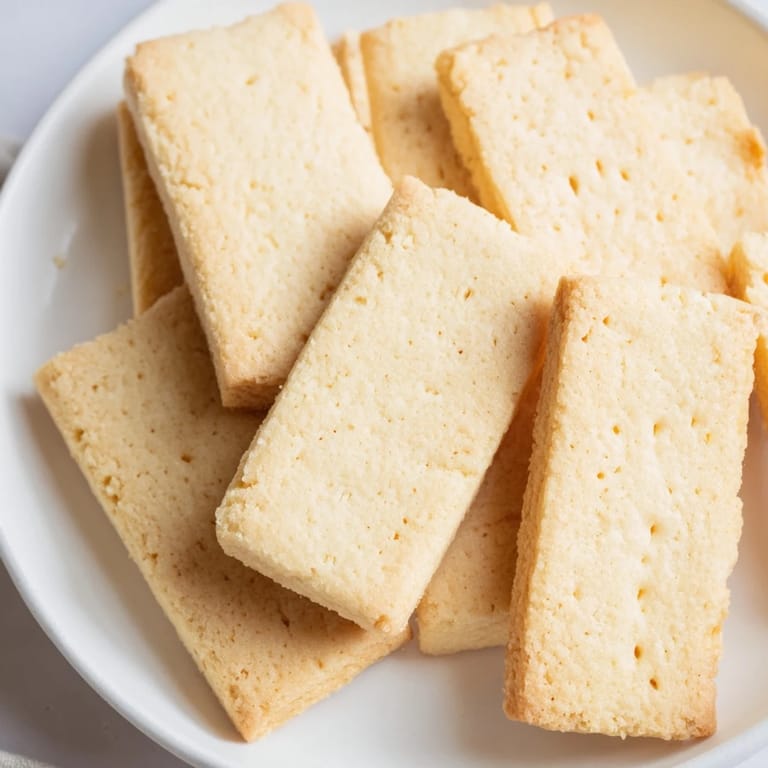
 These shortbread cookies are the kind of thing that teaches you something about cooking every time you make them—about simplicity, about the power of a single ingredient like butter, about knowing when to stop. Bake them when you want something that feels both indulgent and honest.
Recipe Questions & Answers
- → What makes the shortbread buttery and crumbly?
The high butter content combined with cornstarch contributes to the tender, crumbly texture and rich flavor.
- → How do I prevent the shortbread from browning too much?
Bake at the recommended temperature and time, removing once edges start to turn pale golden to avoid over-browning.
- → Can I add flavors to this buttery base?
Yes, adding finely grated lemon or orange zest enhances the flavor, providing a fresh citrus note.
- → What is the best way to cut the shortbread?
Score the dough before baking into wedges or fingers, then cut along scored lines once cooled for clean portions.
- → How should I store the shortbread to maintain freshness?
Keep in an airtight container at room temperature; it stays fresh for up to one week without losing texture.