 Add to Pinterest
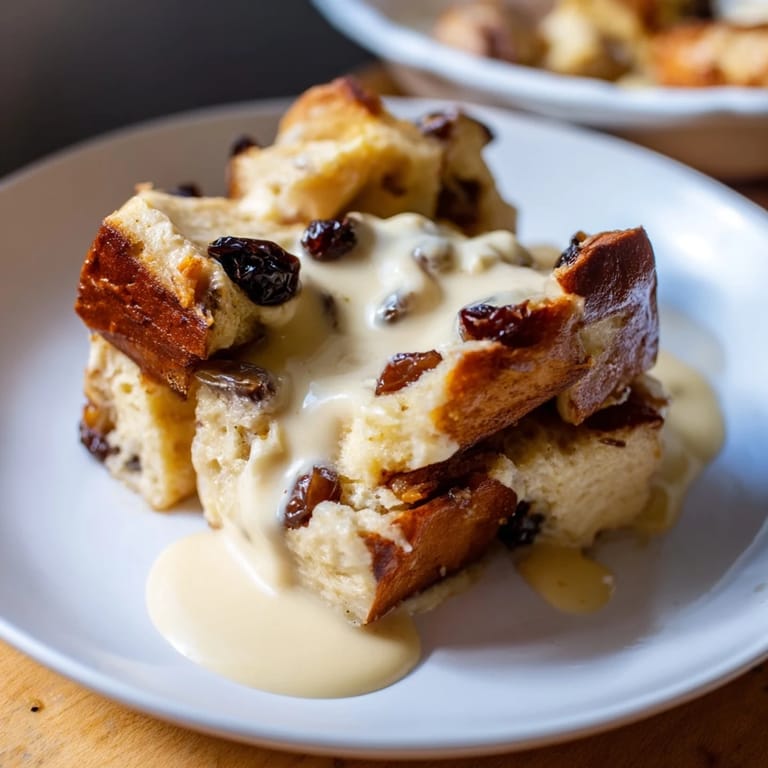
 My grandmother's kitchen always smelled like vanilla and warm bread on Sunday afternoons, and that's where I first understood that bread pudding wasn't about leftover bread at all—it was about transformation. She'd slice day-old brioche into cubes with the kind of care most people reserve for fancier things, then soak them in this golden custard that somehow made the ordinary feel luxurious. The first time I made it myself, I was skeptical that stale bread could become something this comforting, but the moment I pulled it from the oven and poured that creamy sauce over the top, I got it.
I made this for a dinner party on a rainy October evening when everyone arrived cold and hungry, and watching people's faces light up as they tasted it—that moment when comfort food actually comforts—reminded me why I cook. One guest asked for the recipe, then another, and suddenly this simple dessert felt like the most important thing I'd made all week.
Ingredients
- Stale bread (6 cups cubed): French bread or brioche works beautifully because they have a tender crumb that soaks up custard without turning mushy—day-old is perfect, and if your bread is fresher, just let it sit out for a few hours.
- Raisins (1 cup): These plump up as they bake and distribute sweet little pockets throughout, though you can swap them for cranberries, chopped dates, or even chocolate chips if that speaks to you.
- Whole milk (2 cups): This creates the body of your custard and keeps it from being too heavy.
- Heavy cream (1 cup for pudding, 1 cup for sauce): This is what makes the texture silky and rich—don't skip it or substitute.
- Eggs (4 large): They're your binding agent and give the pudding its custardy structure.
- Granulated sugar (3/4 cup for pudding, 1/2 cup for sauce): Adjust to your sweetness preference, though I wouldn't reduce it much without affecting texture.
- Vanilla extract (2 tsp for pudding, 1 tsp for sauce): Real vanilla makes such a difference here—the aroma alone is worth it.
- Ground cinnamon and nutmeg: These warm spices are gentle enough to complement without overwhelming, and they hint at autumn no matter what season it is.
- Salt (1/4 tsp for pudding, pinch for sauce): This tiny amount brightens all the other flavors.
- Unsalted butter (2 tbsp melted plus extra for greasing): Use real butter for both moisture and flavor.
Tired of Takeout? 🥡
Get 10 meals you can make faster than delivery arrives. Seriously.
One email. No spam. Unsubscribe anytime.
Instructions
- Set your oven and prepare your dish:
- Preheat to 350°F and grease a 9x13 inch baking dish generously with butter—this prevents sticking and adds flavor. You're creating the perfect foundation for everything that comes next.
- Layer the bread and raisins:
- Spread your bread cubes evenly in the dish, then scatter the raisins over top so they're distributed throughout. This takes just a minute and ensures every bite has something sweet in it.
- Whisk the custard base:
- In a large bowl, combine the milk, heavy cream, eggs, sugar, vanilla, cinnamon, nutmeg, salt, and melted butter. Whisk until everything is smooth and the sugar has mostly dissolved—don't overthink it, just make sure there are no obvious egg streaks.
- Soak the bread:
- Pour the custard over the bread and raisins, then gently press the bread cubes down with a spoon so they're mostly submerged and can actually absorb the mixture. Let it sit for 10 minutes so the bread has time to drink it all in.
- Bake to golden perfection:
- Transfer to the oven for 40 to 45 minutes—you're looking for the top to be puffed and golden and a knife inserted in the center to come out clean. The smell will drive you slightly crazy in the best way.
- Prepare the sauce while it bakes:
- In a small saucepan over medium heat, combine the cream, sugar, and butter, stirring occasionally until the sugar dissolves and the mixture just begins to simmer. Remove from heat and stir in vanilla and a pinch of salt.
- Serve warm with sauce:
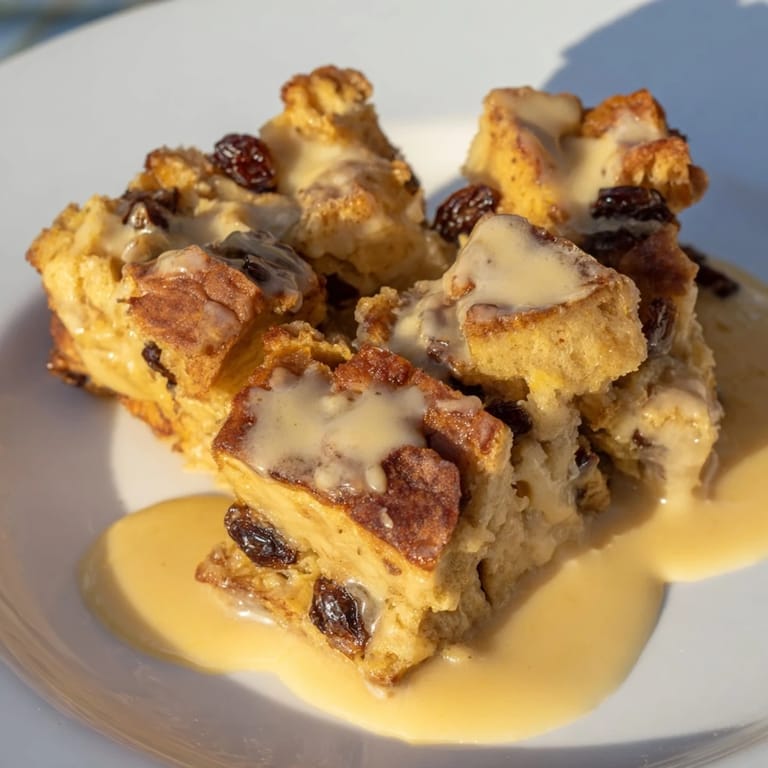
- Let the pudding cool for just a few minutes, then spoon it into bowls and drizzle generously with that warm, creamy sauce. This is best enjoyed while still warm, when everything is at its most luxurious.
 Add to Pinterest
 There's something deeply satisfying about transforming something destined for the trash into a dessert that makes people ask for seconds. The day my roommate brought home leftover bread from a bakery and I turned it into this pudding, she understood why I get excited about cooking—it's not about having fancy ingredients, it's about knowing what to do with what you have.
Why This Dessert Feels Like Home
Bread pudding sits in this beautiful space between frugal and indulgent, practical and comforting. It's the kind of dessert that tastes expensive but costs almost nothing, and it brings people together without requiring you to be some fancy baker. Every culture has a version of it because the concept is so simple—stale bread, custard, heat—yet somehow universally beloved.
Customizing Your Own Version
This recipe gives you a foundation, but bread pudding is forgiving and welcomes your own riffs. I've made it with dried cranberries and orange zest, with chocolate chips mixed into the custard, and once with a splash of bourbon that turned a weeknight dessert into something genuinely special. The beauty is that you can adapt it based on what you have or what sounds good that particular day.
Make-Ahead Tips and Serving Ideas
You can assemble this completely the night before—prepare the custard, pour it over the bread, cover it, and refrigerate. In the morning, just pop it in the oven; it might need an extra 5 minutes because it starts cold. Leftovers keep for a few days and reheat gently in a 300°F oven or in the microwave, though the sauce is best made fresh.
- Serve it warm with a scoop of vanilla ice cream for a contrast of temperatures that's genuinely magical.
- The pudding is wonderful on its own if you prefer something less sweet, though the sauce really does elevate it.
- If you have extra sauce and no pudding left, I won't judge you for spooning it over cake or ice cream the next day.
 Add to Pinterest
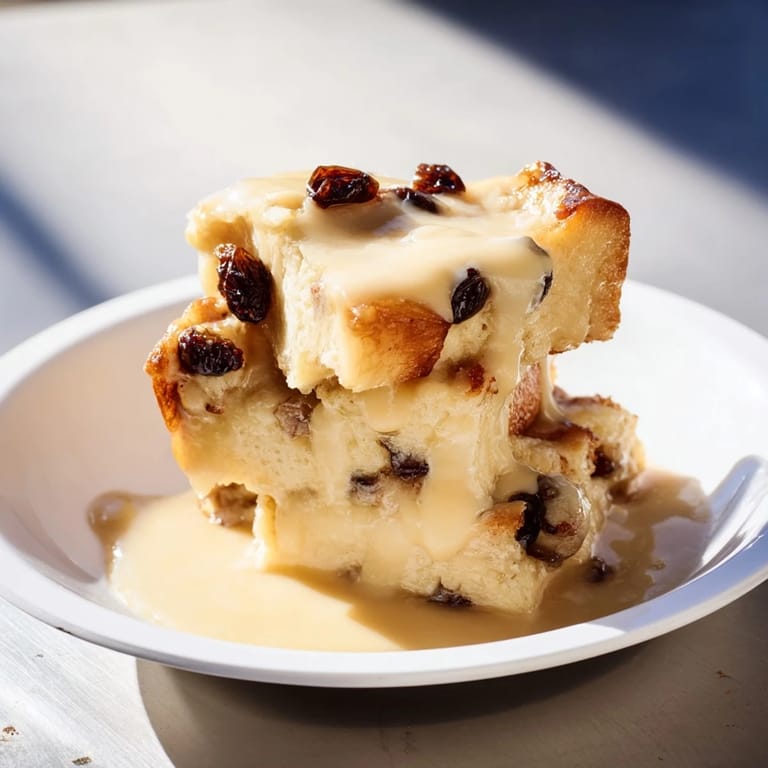
 Bread pudding is proof that the best comfort food comes from knowing how to respect simple ingredients and give them time to become something beautiful. Every time I make it, I think of my grandmother's kitchen and feel grateful for a recipe that never gets old.
Recipe Questions & Answers
- → Can I use different types of bread?
Yes, French bread or brioche works best for its texture, but other stale breads can be used to suit your preference.
- → What can be substitued for raisins?
Dried cranberries, chopped dates, or chocolate chips make great alternatives for a varied flavor profile.
- → How is the custard mixture prepared?
The custard is made by whisking milk, cream, eggs, sugar, vanilla, and spices until smooth before pouring over the bread cubes.
- → How do I achieve a golden top on the pudding?
Baking at 350°F (175°C) for 40-45 minutes allows the pudding to puff up and develop a rich golden crust.
- → Can the sauce be customized?
Yes, adding a splash of bourbon or rum to the sauce adds extra depth, enhancing the overall warmth and flavor.
- → How should leftovers be reheated?
Reheat gently in an oven or microwave to maintain the creamy texture without drying out the pudding.