 Add to Pinterest
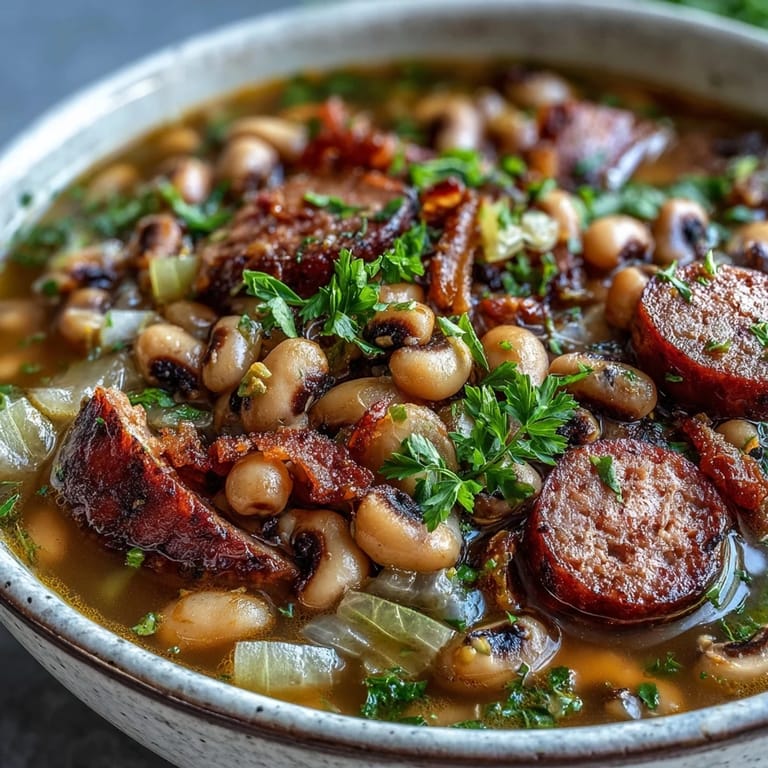
 My grandmother used to say that black-eyed peas on New Year's Day weren't just tradition—they were insurance, a quiet way of making sure the year ahead stayed full and fortunate. I didn't understand it then, but the first time I made this pot myself, stirring in that smoky sausage and watching the kitchen fill with the smell of bacon and Creole spices, something clicked. There's a reason this dish has survived generations in Southern kitchens, and it's not just luck.
I made this for a group of friends on a freezing January evening, and someone asked if I'd grown up eating this. I hadn't—my family was from somewhere else entirely—but watching everyone go quiet after that first spoonful, the way they kept coming back for more, made me understand why it matters so much to people. Food is a kind of adoption, I think, and that night I became part of something older than myself.
Ingredients
- Smoked sausage (Andouille or Kielbasa): This is where the soul of the dish lives—choose a good quality one because you can taste the difference in every bite, and it seasons everything around it.
- Thick-cut bacon: Render it low and slow so it crisps properly; the fat becomes your flavor foundation and shouldn't be discarded.
- Dried black-eyed peas: Soak them or quick-boil them—this matters for even cooking and creamy texture without mushiness.
- The holy trinity (onion, bell pepper, celery): Dice them the same size so they soften together and create a unified base that holds the spices.
- Chicken broth: Use low-sodium so you can control the salt and taste the peas; this becomes your cooking liquid and final sauce.
- Bay leaves, smoked paprika, thyme, and cayenne: Don't skip the smoked paprika—it echoes the sausage and adds complexity that salt alone never could.
Tired of Takeout? 🥡
Get 10 meals you can make faster than delivery arrives. Seriously.
One email. No spam. Unsubscribe anytime.
Instructions
- Prepare your peas the night before (or quick-soak them):
- If you have time, soak them overnight in cold water—they'll cook more evenly and won't split. If you're in a hurry, pour boiling water over them and let them sit for an hour. Either way, drain and rinse before you start cooking.
- Render the bacon until it sings:
- Cut it into small pieces and cook it slowly over medium heat so the fat releases gradually and the bacon crisps without burning. This rendered fat is liquid gold for sautéing everything that follows.
- Brown the sausage in that bacon fat:
- Let the slices sit undisturbed for a moment so they develop a golden crust. You want color here because it brings depth to the broth.
- Sauté the vegetable base until soft:
- Add the onion, pepper, and celery to the pot and cook until they're tender and beginning to turn translucent, about 5 to 6 minutes. Then add the garlic and cook just until fragrant—roughly a minute more.
- Build the broth with spices and peas:
- Stir in your rinsed peas, the broth, water, and all the seasonings at once. This is when the dish really begins to come together—you'll see the color deepen as the paprika and bay leaves release their essence.
- Return the meat and bring it all to a gentle boil:
- Once the broth reaches a boil, add the bacon and sausage back in, then reduce the heat to low, cover the pot, and let it simmer undisturbed for 1 to 1.5 hours. You're looking for tender peas and a broth that tastes intentional.
- Taste, adjust, and finish with parsley:
- Before serving, remove the bay leaves and taste carefully—you might need more salt or a pinch more cayenne depending on your broth. Parsley at the end brightens everything and makes it feel fresh despite the long cooking.
 Add to Pinterest
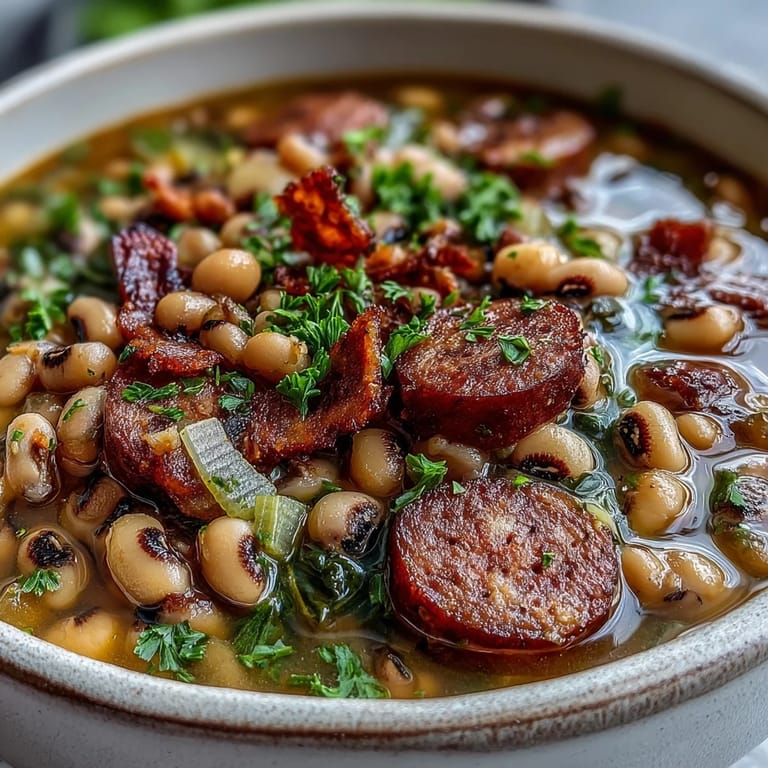
 There's a moment near the end of cooking when you lift the lid and the steam rises up carrying all those spices straight to your face—that's when you know you've gotten it right. It's not flashy or complicated, but it is deeply, honestly good.
The Southern Tradition Behind This Dish
Black-eyed peas show up on January 1st tables across the South not because of a recipe but because of belief—the idea that they bring luck and prosperity into the new year. Some families eat them with cornbread (which supposedly represents gold) and collard greens (which represent paper money). It's a quiet ritual wrapped in a meal, the kind of thing that only matters if you decide it does, and everything about it is better when shared.
Timing and Make-Ahead Notes
This dish actually tastes better the next day after the flavors have settled and mingled overnight in the refrigerator. You can make it entirely ahead of time and reheat it gently—add a splash of water or broth if it's thickened too much. It also freezes beautifully for up to three months, which means you can have a pot of good luck ready whenever you need it.
How to Serve It (And Why It Matters)
Serve this over rice or with cornbread on the side—both absorb the broth and make the meal feel complete. A hot sauce bottle on the table lets people add their own heat level, and collard greens or sautéed mustard greens alongside round out the plate with something sharp and green. The peas are rich enough to stand alone, but they're happier as part of a table.
- Keep hot sauce nearby because some people want extra heat and it's better to let them decide.
- Make cornbread fresh if you can, even a box mix—warm cornbread and hot peas are a match that matters.
- If anyone's vegetarian, skip the meat but add extra smoked paprika or a few drops of liquid smoke so the broth doesn't lose its depth.
 Add to Pinterest
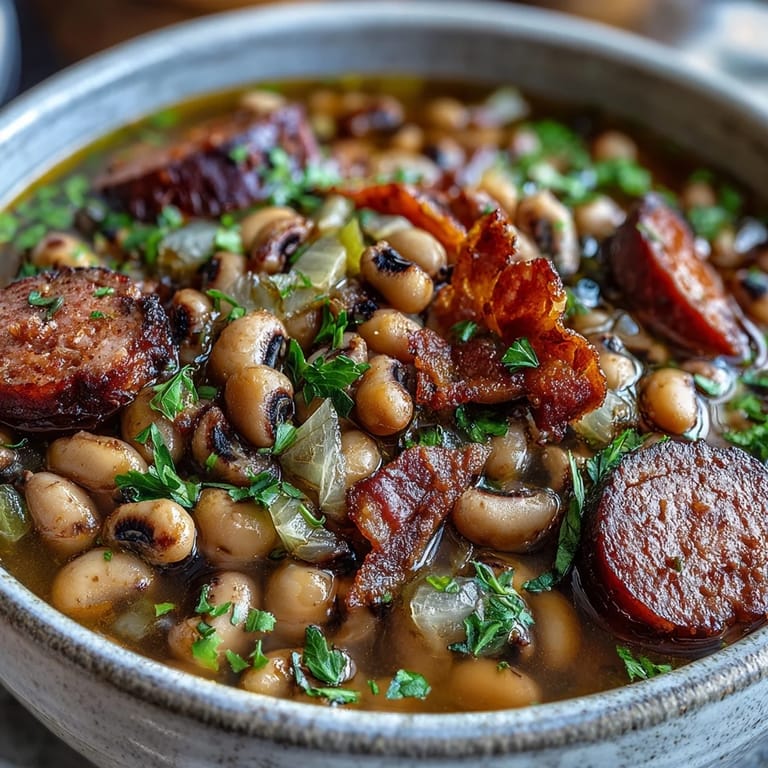
 This is the kind of food that reminds you why people cook together, why traditions exist, and why a simple pot of beans can somehow feel like belonging. Make it, share it, and let it become part of your own story.
Recipe Questions & Answers
- → Do I need to soak the black-eyed peas before cooking?
Yes, dried black-eyed peas require overnight soaking for even cooking and optimal texture. If you're short on time, use the quick soak method: cover peas with boiling water, let stand for 1 hour, then drain and rinse. This significantly reduces preparation time while maintaining the peas' structure during simmering.
- → Can I make this dish vegetarian?
Absolutely. Simply omit the bacon and sausage, then substitute vegetable broth for the chicken broth. Add extra smoked paprika or a few drops of liquid smoke to maintain that signature smoky depth that the meats would typically provide. The result remains satisfyingly hearty and flavorful.
- → What's the best way to serve Southern black-eyed peas?
Traditional serving includes spooning the peas over steamed white rice, which soaks up the flavorful broth. Cornbread makes an ideal accompaniment for dipping. For a complete Southern spread, pair with sautéed collard greens and cornbread. Iced tea or a crisp white wine balances the rich, smoky flavors beautifully.
- → How do I store and reheat leftovers?
Cool completely and refrigerate in an airtight container for up to 5 days. The flavors often improve after a day or two as the spices continue to meld. Reheat gently over low heat, adding a splash of broth or water if the consistency seems too thick. These peas also freeze well for up to 3 months.
- → Why are black-eyed peas traditionally eaten on New Year's Day?
Southern folklore holds that black-eyed peas represent coins and bring prosperity and good luck when eaten on New Year's Day. When paired with greens (representing paper money) and cornbread (symbolizing gold), the meal becomes a full plate of hope for financial fortune in the coming year.
- → Can I use canned black-eyed peas instead of dried?
You can substitute canned peas for convenience, but the texture and flavor profile will differ. Use about 3-4 cans (drained and rinsed) and reduce the simmering time to 30-40 minutes just to blend flavors. Dried peas produce superior results, developing a creamier consistency and absorbing the smoky spice blend more thoroughly.