 Add to Pinterest
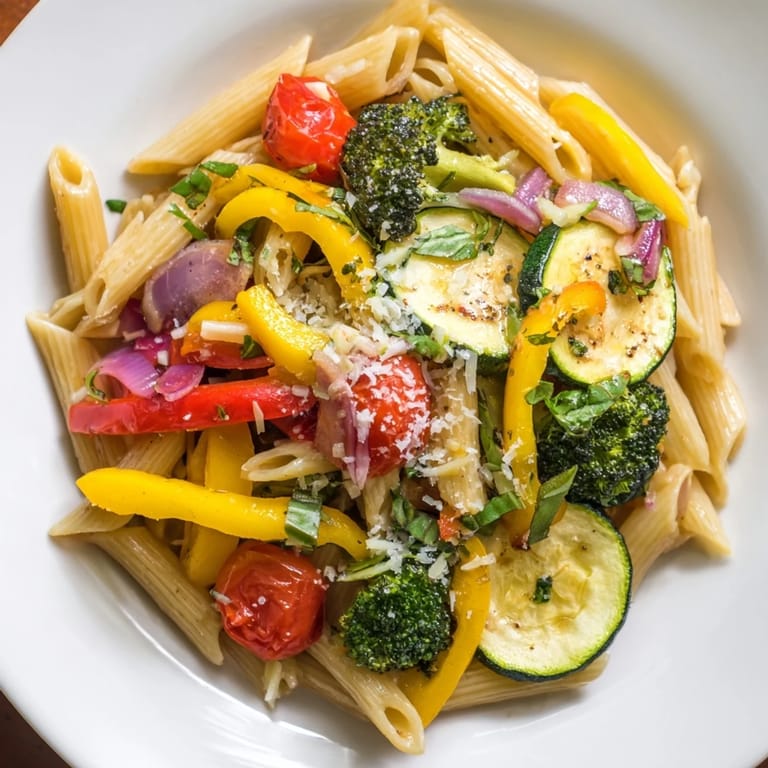
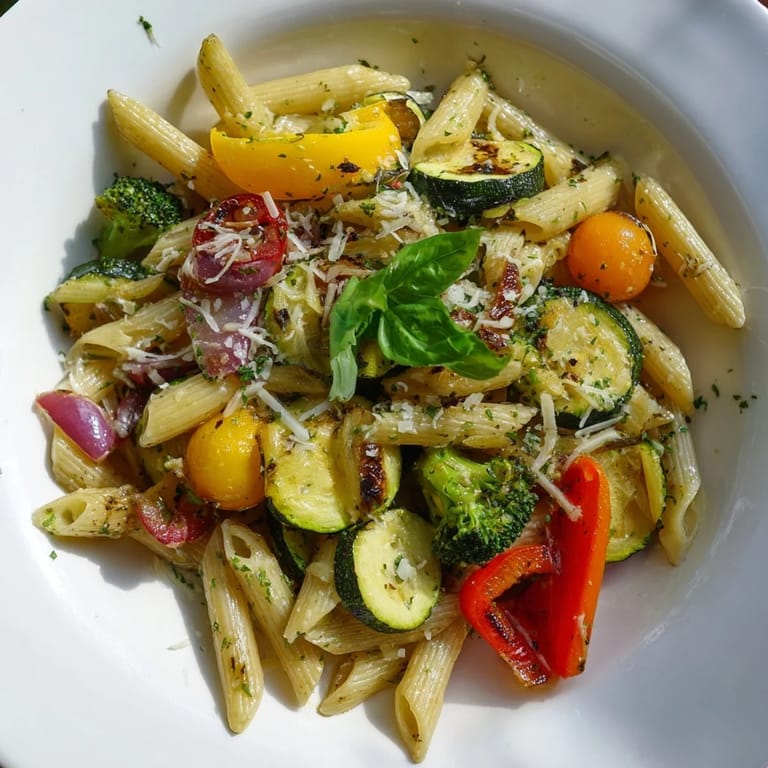
 There was a Tuesday evening when I opened the fridge to find a drawer full of vegetables that needed using up, and no plan whatsoever. I pulled out bell peppers, zucchini, broccoli, and a handful of cherry tomatoes, deciding to roast them all together while pasta water boiled. The kitchen smelled like summer and garlic, and by the time I tossed everything together with a little Parmesan, I realized I'd stumbled onto something I'd make again and again. Sometimes the best recipes aren't planned, they just happen when you trust what's in front of you.
I made this for friends one spring evening when we sat outside with wine and string lights overhead. One of them, a self-proclaimed veggie skeptic, went back for thirds and admitted she'd never thought vegetables could be the star of a pasta dish. We lingered at the table longer than usual, talking and laughing while the bowl emptied. It's funny how a simple meal can turn into a memory you carry with you.
Ingredients
- Penne or fusilli pasta: These shapes have ridges and curves that catch the olive oil and bits of roasted vegetables, making every bite satisfying.
- Zucchini and yellow squash: They roast beautifully and add a tender, slightly sweet contrast to the other vegetables.
- Red and yellow bell peppers: Their natural sugars caramelize in the oven, giving you those charred, smoky edges that make this dish sing.
- Red onion: Roasting softens its sharpness and turns it mellow and sweet, almost jammy.
- Cherry tomatoes: They burst in the oven and release their juices, creating a natural sauce that clings to the pasta.
- Broccoli florets: They get crispy at the tips and stay tender at the stems, adding texture and a slight bitterness that balances the sweetness.
- Extra virgin olive oil: This is your flavor carrier, so use one you actually like the taste of.
- Garlic: Sautéed just until fragrant, it perfumes the whole dish without overpowering the vegetables.
- Italian herbs: A blend of oregano, basil, and thyme brings warmth and that classic Italian vibe.
- Parmesan cheese: Freshly grated melts into the warm pasta and adds a salty, nutty richness that ties everything together.
- Fresh basil or parsley: A handful of herbs at the end brightens the dish and makes it feel alive.
- Lemon wedges: Optional, but a squeeze of lemon juice right before serving wakes up all the flavors.
Tired of Takeout? 🥡
Get 10 meals you can make faster than delivery arrives. Seriously.
One email. No spam. Unsubscribe anytime.
Instructions
- Prep the oven and vegetables:
- Preheat your oven to 220°C (425°F) and line a large baking sheet with parchment paper. Arrange all your sliced vegetables in a single layer, drizzle with olive oil, sprinkle with herbs, salt, and pepper, then toss until everything is lightly coated.
- Roast until golden:
- Slide the tray into the oven and roast for 18 to 20 minutes, stirring halfway through so the edges get caramelized and tender. You'll know they're ready when the peppers have some char and the tomatoes start to collapse.
- Boil the pasta:
- While the vegetables roast, bring a large pot of salted water to a rolling boil and cook your pasta until al dente. Before draining, scoop out half a cup of the starchy cooking water, it's your secret weapon for a silky finish.
- Sauté the garlic:
- In a large skillet over medium heat, warm the remaining olive oil and add the minced garlic, stirring constantly for about 30 seconds until it smells incredible but hasn't turned brown.
- Toss it all together:
- Add the roasted vegetables and drained pasta to the skillet, tossing gently with tongs. Drizzle in a little reserved pasta water at a time until everything is glossy and cohesive.
- Finish and serve:
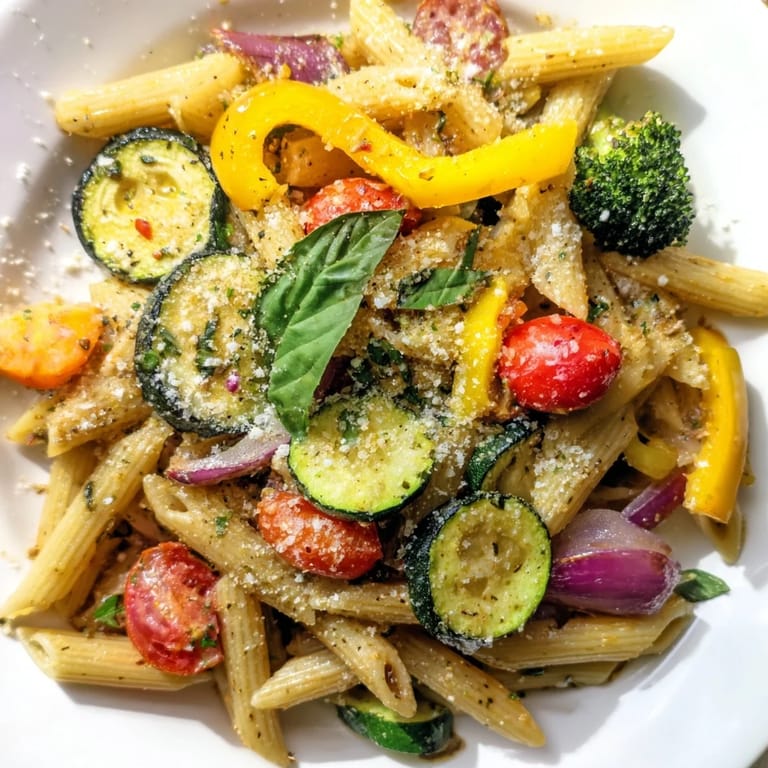
- Remove the skillet from the heat, stir in half the Parmesan and the fresh herbs, then taste and adjust the seasoning. Serve immediately with the remaining cheese on top and a squeeze of lemon if you like.
 Add to Pinterest
 One night, my neighbor knocked on the door just as I was plating this, and I invited her to stay for dinner on a whim. We ate at the kitchen counter, talking about nothing in particular, and she told me it reminded her of meals she had in Rome years ago. I think that's the magic of this dish, it doesn't try too hard, but it makes people feel cared for.
Choosing Your Vegetables
This recipe is endlessly adaptable depending on what's in season or what you have on hand. In spring, I swap in asparagus and snap peas for a lighter, greener version. Come fall, I'll roast cubes of butternut squash and add mushrooms for something earthier and more comforting. The key is to choose vegetables that roast well and have different textures, some that get crispy, some that stay tender, and some that release their juices.
Making It a Complete Meal
While this pasta is plenty satisfying on its own, I sometimes add protein when I want to stretch it further or make it heartier. Sautéed shrimp tossed in at the end works beautifully, as does shredded rotisserie chicken or even a can of drained chickpeas for a plant based boost. If you're feeding someone who loves a bit of heat, a pinch of red pepper flakes in the garlic oil transforms the whole dish. I've also served this alongside a simple arugula salad dressed with lemon and olive oil, and it felt like a proper dinner party.
Storing and Reheating
Leftovers keep well in the fridge for up to three days, though the pasta will soak up some of the olive oil as it sits. When I reheat it, I add a splash of water or broth to a skillet and warm it gently over medium heat, stirring until it loosens up again. You can also eat it cold as a pasta salad, which I've done more than once straight from the container at my desk. It's not quite the same as fresh, but it's still delicious and sometimes that's all you need.
- Store in an airtight container and keep the extra Parmesan separate so it doesn't get soggy.
- Reheat gently with a bit of liquid to bring back the silky texture.
- If serving cold, toss with a little extra olive oil and a squeeze of lemon to brighten it up.
 Add to Pinterest
 This is the kind of recipe that grows with you, changing with the seasons and whatever's available, but always delivering something warm and satisfying. I hope it becomes one of those dishes you reach for without thinking, the one that feels like home no matter where you are.
Recipe Questions & Answers
- → Can I prepare this dish ahead of time?
Yes, you can roast the vegetables up to 2 days in advance and store them in an airtight container in the refrigerator. Cook the pasta fresh just before serving, then toss everything together. This makes it convenient for meal prep.
- → What vegetables work best for roasting?
Any firm, seasonal vegetables work well. Summer brings zucchini and squash, while asparagus, snap peas, mushrooms, and green beans are excellent year-round options. Avoid delicate greens that won't hold up to roasting heat.
- → How do I make this dish creamy without cream?
Reserve pasta cooking water—its starch creates a silky sauce when tossed with the pasta and vegetables. Add it gradually while tossing until you reach desired consistency. This traditional Italian technique needs no cream.
- → What wine pairs well with this meal?
Crisp white wines work beautifully. Pinot Grigio and Sauvignon Blanc complement the fresh vegetables and garlic without overpowering the dish. Both are light enough to let the food's natural flavors take center stage.
- → How can I add protein to this dish?
Sautéed chicken breast, shrimp, or chickpeas integrate seamlessly. Cook protein separately with seasonings, then toss into the skillet with vegetables and pasta in the final step for even distribution and consistent texture.
- → Is this dish suitable for gluten-free diets?
Absolutely. Use certified gluten-free pasta and verify all packaged ingredients, including broth if added. The roasting method and cooking technique remain unchanged, making adaptation straightforward.