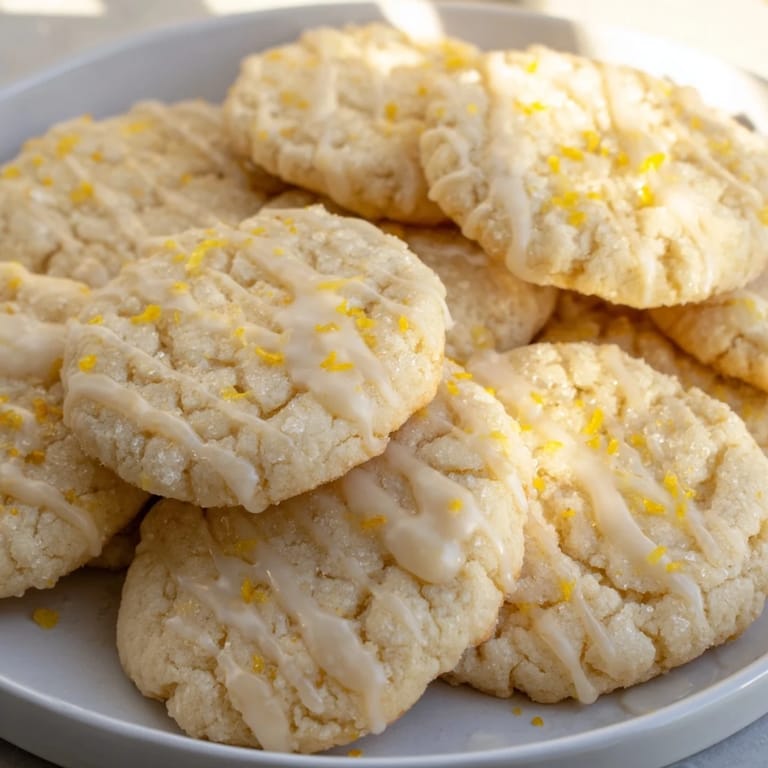
 Add to Pinterest
 There's something about the smell of lemon zest hitting a warm kitchen that makes everything feel lighter. I discovered these cookies by accident one afternoon when I was trying to brighten up an ordinary Tuesday with something more interesting than my usual baking rotation. The combination of soft, buttery dough and that sharp citrus punch felt like capturing sunshine in a cookie, and I've been making them ever since for anyone who needs a little mood boost.
I made these for a friend who was going through a rough patch, and watching her face when she bit into one and got that burst of lemon was worth every minute of mixing and rolling. She texted me the next day asking for the recipe, which meant I'd already planned to make another batch anyway.
Ingredients
- All-purpose flour: The backbone here—make sure it's measured by spooning and leveling, not scooping straight from the bag, or you'll end up with dense cookies that taste more like actual cake.
- Baking soda: Just a whisper of this awakens the lemon flavor and helps the cookies spread into those perfectly chewy-edged little discs.
- Salt: A tiny pinch that you might not even taste directly but absolutely need to balance the sweetness and make the lemon pop.
- Unsalted butter: Room temperature is non-negotiable—it creams better and makes the dough light and airy instead of dense.
- Granulated sugar: The cup for the dough creams with butter, and the extra quarter cup for rolling gives those corners that irresistible crispy-sweet shell.
- Large egg: Brings everything together and adds just enough moisture without making the cookies cake-like.
- Fresh lemon juice and zest: This is where the magic lives—fresh citrus tastes completely different from bottled, and the zest adds little flavor bursts throughout.
- Vanilla extract: A quiet supporter that lets the lemon shine without fighting for attention.
- Powdered sugar for the glaze: Sifted so there are no lumps that catch on the whisk and ruin your smooth finish.
Tired of Takeout? 🥡
Get 10 meals you can make faster than delivery arrives. Seriously.
One email. No spam. Unsubscribe anytime.
Instructions
- Get everything ready:
- Preheat to 350°F and line your baking sheets with parchment paper so the cookies slide off easily once they cool. This moment of prep means no scrambling later.
- Mix the dry team:
- Whisk flour, baking soda, and salt in a medium bowl until they're evenly combined. This distributes the leavening so every cookie rises gently and evenly.
- Cream the butter and sugar:
- Beat them together for 2 to 3 minutes until they're pale and fluffy—this is where air gets trapped in the dough, making cookies tender instead of tough. You'll see the color actually lighten as you mix.
- Wake it up with lemon:
- Add the egg, fresh lemon juice, lemon zest, and vanilla, beating until everything is fully combined. The mixture should look smooth and smell unmistakably bright.
- Bring it together:
- Mix in the dry ingredients gently until just combined—overworking here makes cookies tough and chewy in the wrong way. Stop as soon as you don't see streaks of flour.
- Roll and coat:
- Scoop tablespoon-sized portions, roll them into balls with your hands, then press each one into the extra granulated sugar so they're completely coated. This sugary shell is what makes them look and taste special.
- Give them space:
- Space cookies 2 inches apart on your baking sheets because they'll spread slightly and you don't want them touching in the oven.
- Bake with attention:
- Bake for 10 to 12 minutes until the edges look set but the tops still look slightly underdone—they'll continue cooking on the pan. This is the secret to chewy centers and crispy edges.
- Cool with patience:
- Let them sit on the pan for 5 minutes so they firm up just enough to move, then transfer to a wire rack to cool all the way. Trying to move them too early means broken cookies.
- Finish with glaze:
- Whisk powdered sugar, fresh lemon juice, and zest until completely smooth with no lumps, then drizzle it over the cooled cookies in whatever pattern feels right. Let it set before serving so it doesn't slide right off onto your hands.
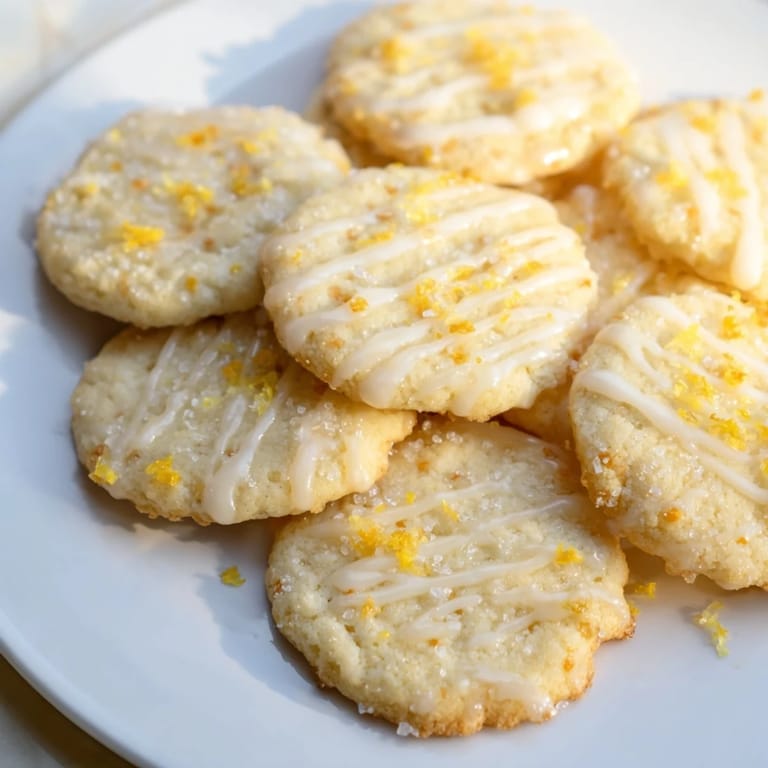 Add to Pinterest
 These cookies have become my default gift when I'm not sure what else to bring, because there's something universally comforting about receiving warm, citrus-scented cookies wrapped in tissue paper. People always ask if they can have the recipe, which has made me realize that simple, honest flavors beat complicated techniques every single time.
The Magic of Zest
Lemon zest is where the real flavor lives—it's the oils and skin of the fruit without any of the juice's acidity, so it contributes pure, concentrated lemon taste. I learned this the hard way when I once made these with only juice and no zest, expecting them to taste the same, and ended up with cookies that tasted a little dull and one-note. Now I zest the lemon first, setting the zest aside before I juice it, and the difference is remarkable.
Why Fresh Lemons Matter Most
The moment you cut into a fresh lemon, those oils are ready to work for you—bottled juice has already lost some of that volatile brightness, and it sits in a bottle slowly getting stale. I can taste the difference immediately when I use fresh versus bottled, and since these cookies are built entirely on lemon flavor, there's nowhere to hide a shortcut. Spending thirty seconds squeezing a lemon feels like the easiest investment in making these taste unmistakably good.
Making Them Your Own
These cookies are a foundation for playing with flavors, and I've experimented with swapping citrus without changing anything else about the method. Lime zest and juice make them tropical and slightly more tart, while orange keeps them sweet and a little more subtle. If you want to lean even harder into the lemon, a few drops of lemon extract added to the dough pushes the flavor further without changing the texture.
- Add a tiny pinch of ground ginger or cardamom to bring warmth that plays beautifully against the citrus brightness.
- Brush the cooled cookies with melted white chocolate and sprinkle with freeze-dried lemon or raspberries for texture and color.
- These pair perfectly with Earl Grey tea, iced lemonade, or even a crisp glass of white wine if you're feeling fancy.
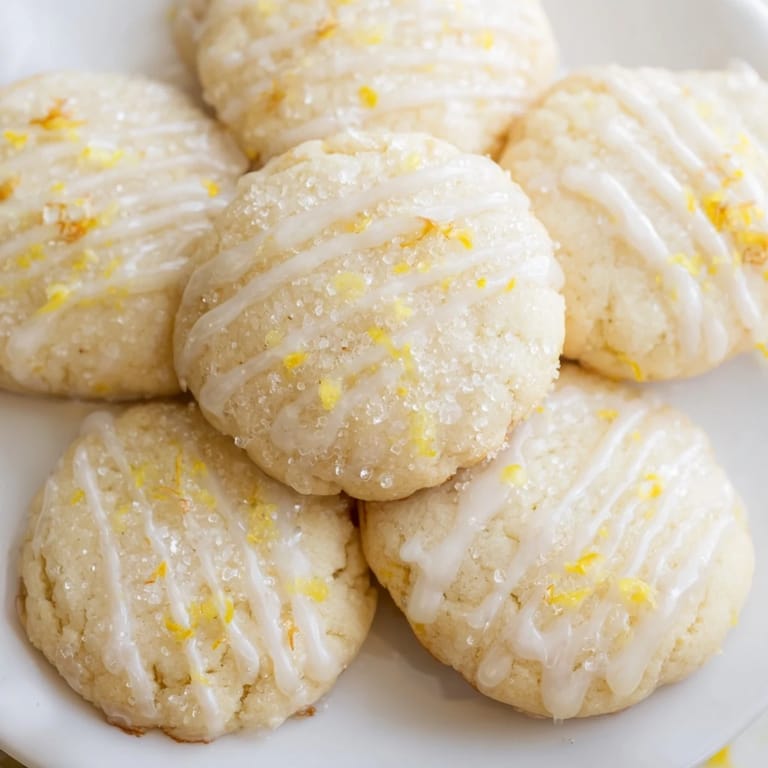 Add to Pinterest
 These cookies remind me why I love baking in the first place—there's nothing complicated here, just good butter, fresh lemon, and enough care to make something that tastes like someone made it with love. Once you make them once, you'll understand why they keep showing up in my kitchen.
Recipe Questions & Answers
- → What makes the cookies soft and buttery?
The use of room-temperature unsalted butter creamed with sugar creates a tender and moist texture, ensuring the cookies remain soft after baking.
- → How does lemon zest enhance the flavor?
Fresh lemon zest adds vibrant citrus oils, providing a fresh and tangy aroma that intensifies the lemon flavor throughout the cookies.
- → Why roll the dough in granulated sugar before baking?
Rolling the dough in granulated sugar gives the cookies a sparkling exterior and a subtle crunch that contrasts nicely with their soft interior.
- → What is the purpose of the citrus glaze?
The glaze, made from powdered sugar and fresh lemon juice and zest, adds a tangy sweetness that complements the buttery base and enhances the lemon notes.
- → Can the citrus glaze be adjusted for different flavors?
Yes, you can substitute lime or orange zest and juice for a unique citrus twist while keeping the glaze smooth and flavorful.