 Add to Pinterest
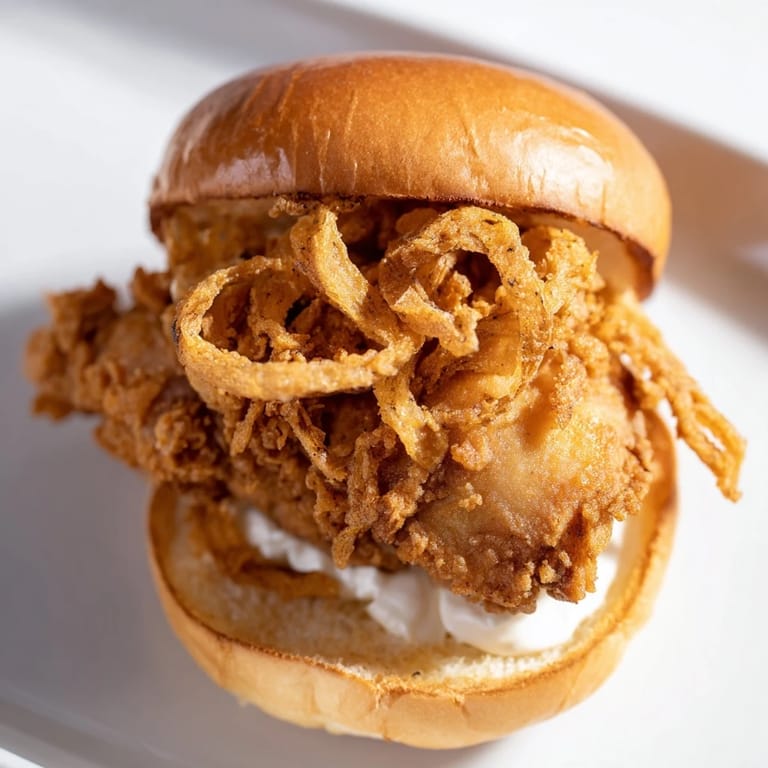
 The sizzle of chicken hitting hot oil used to scare me until I learned to trust the sound. This sandwich taught me that crunch matters just as much as flavor, and that sometimes piling on fried onions is exactly the right move. I'd been chasing that perfect chicken sandwich for years, trying different spice blends and coatings, when I realized the secret wasn't complexity. It was about getting each layer right: tender marinated meat, shatteringly crisp breading, and onions so crunchy they almost sing.
I made these sandwiches for a Sunday lunch when my brother visited, and he ate two before I'd even assembled mine. He kept talking about the onions, how they reminded him of the ones on green bean casserole but better, crispier, less soggy. We stood in the kitchen with napkins tucked into our shirts like kids, juice running down our wrists. That's when I knew this recipe was a keeper.
Ingredients
- Boneless, skinless chicken thighs: Thighs stay moister than breasts and handle high heat without drying out, plus they have more flavor naturally.
- Buttermilk: The acidity tenderizes the meat while adding tang, and it helps the breading stick like glue when you dredge.
- Garlic powder and paprika: These season the marinade from the inside out, building flavor in layers you'll taste in every bite.
- All purpose flour and cornstarch: Flour gives structure, cornstarch gives that glass like crunch that makes fried chicken unforgettable.
- Smoked paprika: A little smokiness in the breading adds depth without needing actual smoke or a grill.
- Yellow onion: Slice them thin and they'll fry up into sweet, crispy tangles that contrast perfectly with the rich chicken.
- Mayonnaise: The base of the aioli, creamy and rich, it carries the garlic and lemon into every corner of the bun.
- Garlic clove: Fresh garlic in the aioli is sharper and more alive than powder, it wakes up the whole sauce.
- Lemon juice: Brightens the aioli and cuts through all that fried richness with just enough acid.
- Dijon mustard: Adds a subtle sharpness and helps emulsify the aioli so it stays creamy and smooth.
- Brioche buns: Soft, slightly sweet, and sturdy enough to hold up under all that chicken and onion without falling apart.
- Vegetable oil: A neutral frying oil that gets hot without smoking and lets the seasonings shine through.
Tired of Takeout? 🥡
Get 10 meals you can make faster than delivery arrives. Seriously.
One email. No spam. Unsubscribe anytime.
Instructions
- Marinate the chicken:
- Whisk the buttermilk with garlic powder, paprika, salt, and pepper until it smells fragrant and looks slightly speckled. Submerge the chicken thighs completely, cover the bowl, and let them soak in the fridge for at least thirty minutes, though a few hours makes them even more tender.
- Prepare the breading:
- In a shallow dish, combine flour, cornstarch, smoked paprika, salt, and pepper, mixing with your fingers so the spices distribute evenly. This dry mixture will cling to the buttermilk coated chicken and create that golden crust.
- Coat the onions:
- Toss the thinly sliced onions in flour, salt, and pepper until each ring is lightly dusted. Shake off the excess so they fry up crisp instead of doughy.
- Fry the onions:
- Heat about an inch of oil to 350°F in a large skillet, then fry the onions in small batches for two to three minutes until they turn golden and crispy. Drain them on paper towels and sprinkle with a pinch of salt while they're still hot.
- Bread the chicken:
- Pull each thigh from the marinade, let the excess drip off, then press it firmly into the breading mixture on both sides. The coating should look thick and craggy, that's what creates the crunch.
- Fry the chicken:
- Slide the breaded thighs into the hot oil and fry for five to seven minutes per side until the crust is deep golden and the internal temperature hits 165°F. Move them to a wire rack so they stay crispy instead of steaming on a plate.
- Make the aioli:
- Stir together mayonnaise, minced garlic, lemon juice, Dijon, salt, and pepper in a small bowl until smooth and creamy. Taste it and adjust the seasoning, it should be tangy, garlicky, and rich.
- Toast the buns:
- If you want extra flavor, butter the cut sides of the brioche buns and toast them in a skillet until golden. This step is optional but it adds a buttery crunch that complements the fried chicken beautifully.
- Assemble the sandwiches:
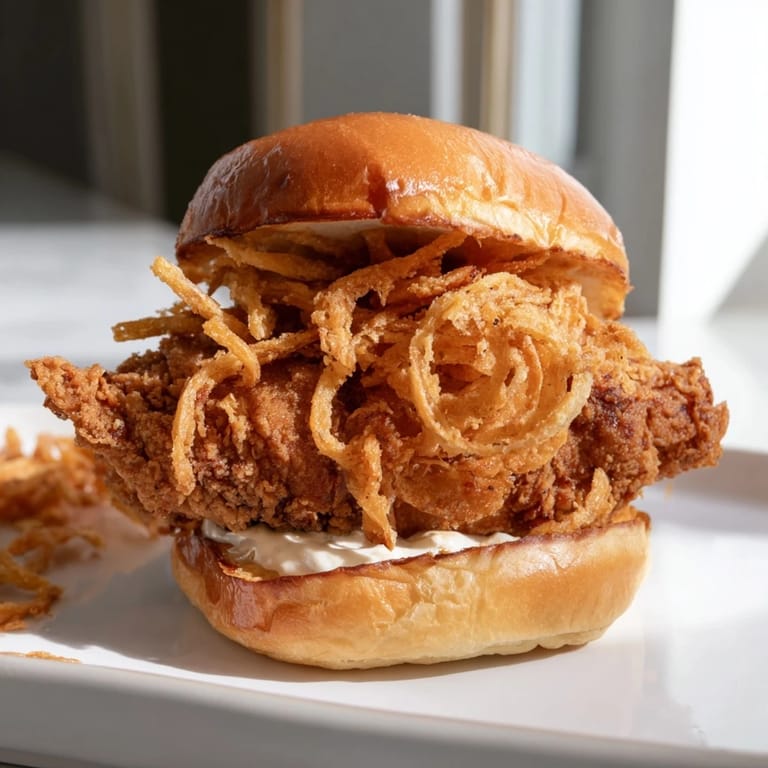
- Spread aioli generously on both sides of each bun, layer with lettuce if using, add a fried chicken thigh, then pile on a handful of crispy onions. Press the top bun gently and serve immediately while everything is still warm and crunchy.
 Add to Pinterest
 There's something about handing someone a sandwich this good and watching their face change after the first bite. My friend Sarah took one look at the pile of onions and said it was too much, then she ate the whole thing without putting it down once. She admitted later that she'd been wrong about the onions. That's the magic of this sandwich, it converts people.
Making It Your Own
If you like heat, stir a teaspoon of hot sauce into the aioli or add a pinch of cayenne to the breading. I've done both at once and it was intense in the best way. You can also swap the chicken thighs for breasts if that's what you have, just remember breasts cook a little faster and can dry out if you're not careful. Some people like pickles on top, which adds a vinegary crunch that cuts through the richness beautifully.
Getting the Timing Right
The marinade can sit for up to four hours, so you can prep it in the morning and fry everything in the evening. I like to fry the onions first and set them aside, then do the chicken without rushing. If you're feeding a crowd, keep the finished chicken warm in a low oven on a wire rack while you fry the rest. Just don't cover them or the crust will steam and lose its crunch.
Serving Suggestions
These sandwiches are rich enough to be the whole meal, but a tangy slaw or crisp dill pickles on the side balances everything out. I've served them with sweet potato fries and it was almost too much fried food, but no one complained. A cold beer or iced tea is the right drink here, something simple that won't compete with all the flavor.
- Make extra aioli and use it as a dip for fries or vegetables
- Double the onion batch and keep extras in an airtight container for salads or burgers
- If you have leftover chicken, it reheats well in a hot oven to crisp the crust back up
 Add to Pinterest
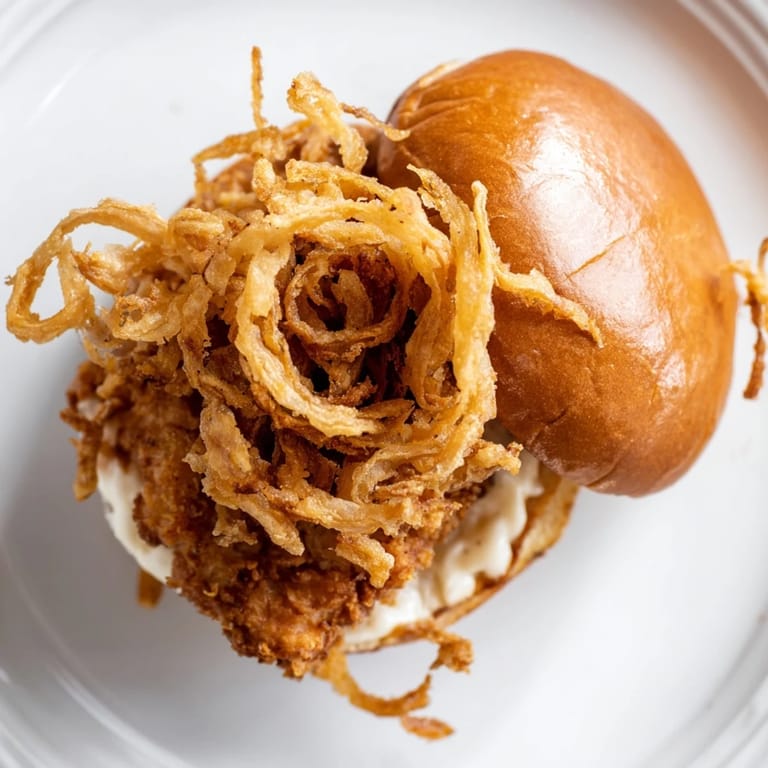
 This sandwich is the kind of food that makes you slow down and pay attention, even if you're standing over the sink. Make it on a weekend when you have time to enjoy the process, and don't be surprised if people ask you to make it again next week.
Recipe Questions & Answers
- → How long should the chicken marinate?
Marinate the chicken for at least 30 minutes for basic flavor, but 4 hours is ideal for maximum tenderness and taste. You can prepare it the night before for convenience.
- → Can I use chicken breasts instead of thighs?
Yes, boneless skinless chicken breasts work well. Pound them to even thickness and reduce cooking time to 4-6 minutes per side to prevent drying out.
- → What's the best way to keep everything crispy?
Assemble sandwiches right before serving. Place fried chicken and onions on the bun last, and avoid letting them sit with wet ingredients like aioli for extended periods.
- → Can I make the aioli ahead of time?
Absolutely. Prepare aioli up to 2 days in advance and refrigerate in an airtight container. Give it a quick stir before using, as it may separate slightly.
- → What oil temperature is best for frying?
Maintain oil at 350°F for optimal results. This temperature creates a crispy exterior while cooking the chicken through. Use a thermometer to monitor consistently.
- → How do I prevent soggy brioche buns?
Lightly butter and toast the buns in a skillet until golden. This creates a barrier that prevents absorption of moisture from the aioli and fillings.